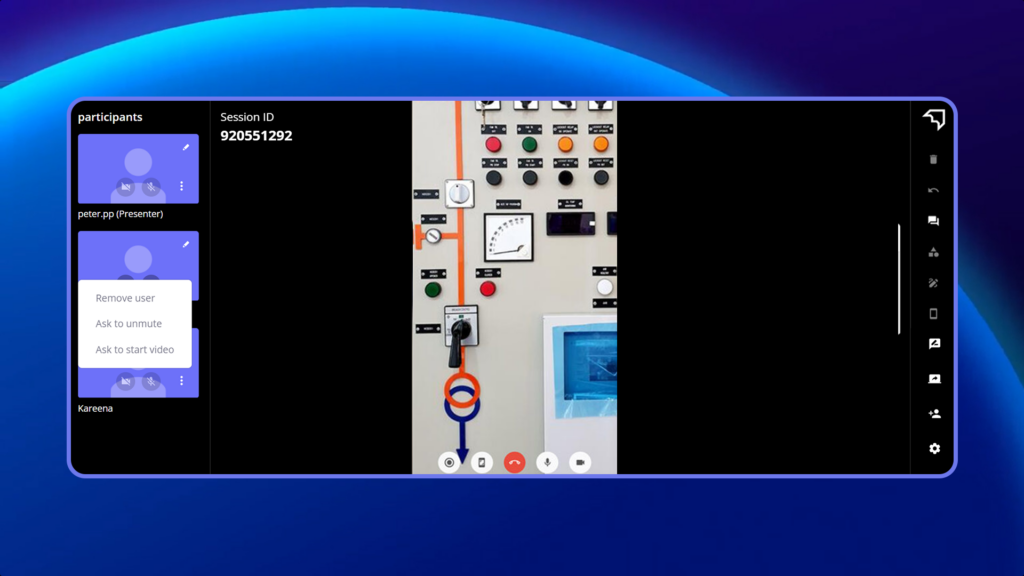
The Session Permission Management feature in Plutomen Connect enables administrators to define organization-wide collaboration policies while providing hosts with comprehensive control over participant access during remote assistance sessions.
Administrators can configure settings such as guest invitation permissions, control whether guest users can edit their display names, and establish default collaboration policies to ensure secure and standardized remote support across the organization.
During an active session, hosts have complete control over participant management. They can admit or remove users, mute or unmute participants, enable or disable camera access, assign presenter privileges, and manage screen-sharing permissions. These controls help maintain an organized and secure collaboration environment throughout the remote assistance session.
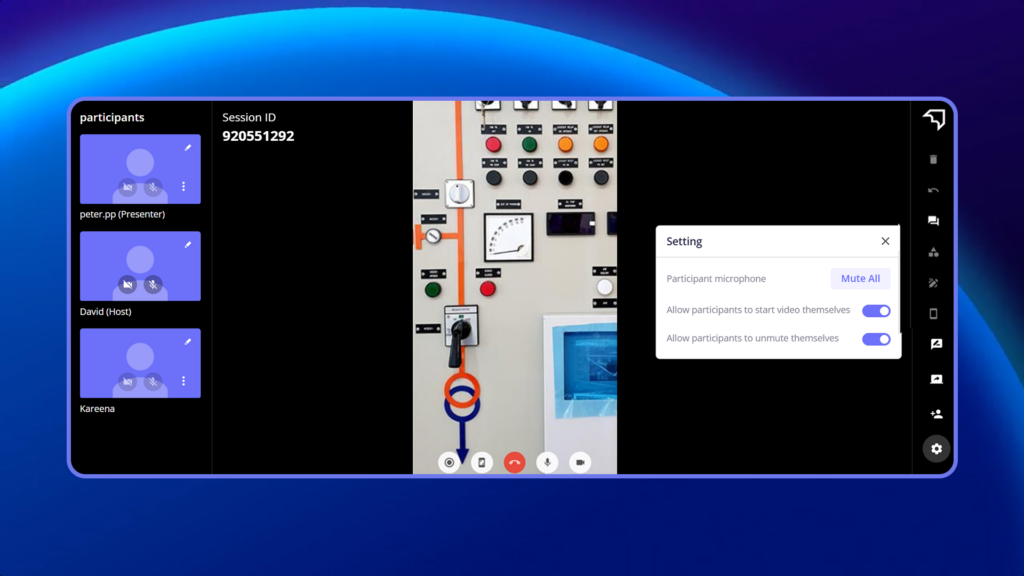
Guest and presenter users operate within the permissions assigned to them. Guest users can join sessions using system-generated identities or administrator-defined naming policies and are restricted to only the features enabled by the host. Presenter users can share content and collaborate when granted the necessary permissions, but cannot modify session settings or administrative configurations.
This centralized permission framework enhances security, prevents unauthorized actions, ensures compliance with organizational policies, and provides a controlled yet flexible remote collaboration experience for industrial support, inspections, troubleshooting, and knowledge-sharing activities.
Key Benefits: #
- Centralized control over session access and participant permissions.
- Secure guest onboarding with configurable invitation and identity policies.
- Host-controlled participant management, including audio, video, and screen-sharing permissions.
- Controlled presenter and guest privileges for secure collaboration.
- Improved compliance, security, and governance across all remote assistance sessions.
- Consistent and structured collaboration experience across mobile, tablet, AR devices, and web platforms.