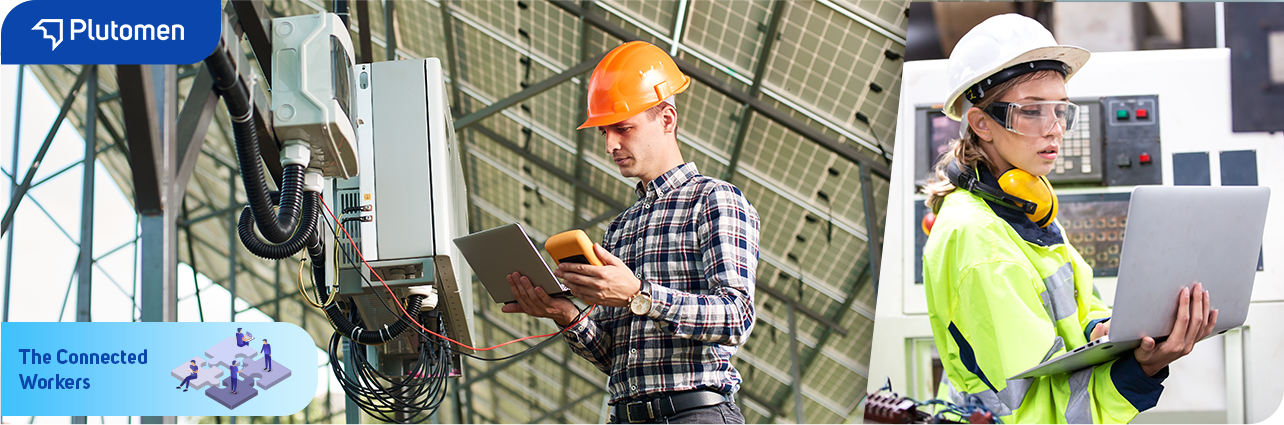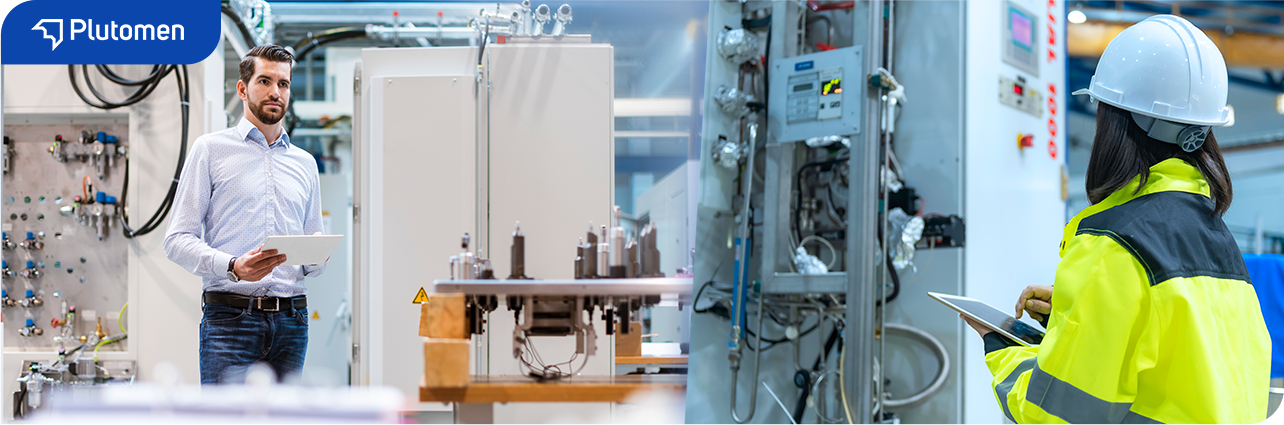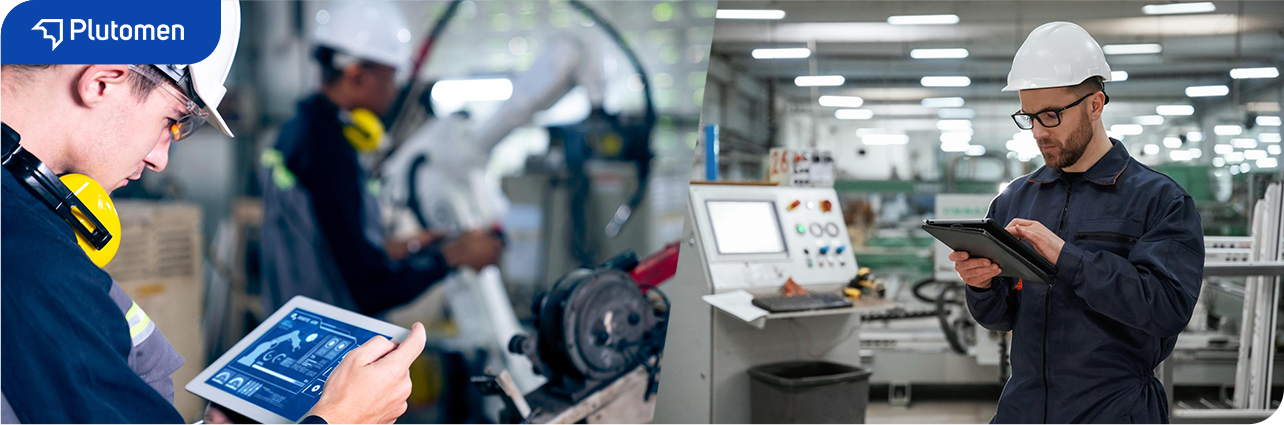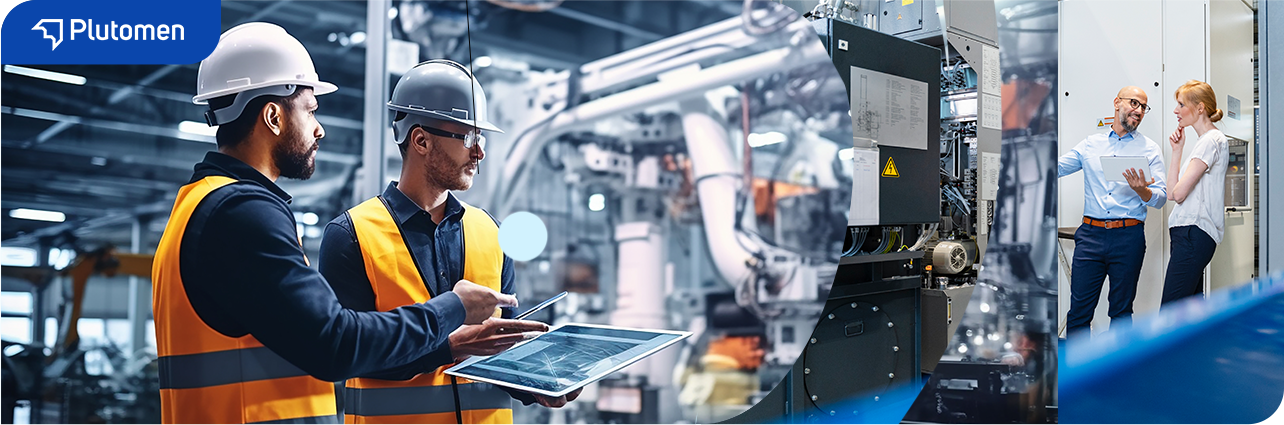
What has truly revolutionized manufacturing? It’s not lean principles, not Industry 4.0 practices, and not even the assembly line. The game-changer is Connected Workers.
These workers, powered by innovative technologies, are changing the face of manufacturing. They’re the driving force behind a shift towards real-time data, predictive maintenance, and higher workforce productivity. Indeed, Connected Worker solutions have been reported to increase productivity by up to 20% and reduce downtime by as much as 30% among those companies implementing it.
This article will delve more into the transformative world of Connected Workers and their role in modern manufacturing.
Connected Workers in Manufacturing: The Revolution
The concept of connected workers is similar across all industries, with minor variations based on specific industry processes. In the manufacturing sector, connected workers or augmented workers use advanced tools and technologies to monitor various aspects such as production, worker productivity, asset downtime, and quality control.
These connected industrial workers are supported by advanced technologies like Augmented Reality, the Internet of Things, Cloud Computing, Data Analytics, and more. Utilizing these advanced technologies allows on-floor factory workers to track all manufacturing processes in real time.
Unlike traditional methods, there is no longer a need for paper-based instructions or checklists to perform industrial tasks. Instead, advanced AR applications are used for manufacturing-related training and on-floor operations.
Technologies Driving Manufacturing Connected Worker Revolution
The global connected worker market is projected to reach $23.4 billion by 2029, driven by Industry 4.0 and the rapid adoption of several advanced technologies. Let’s take a quick look at the technologies making this possible.
AI and Machine Learning
Machine Learning and Artificial Intelligence are indispensable technologies for every industrial sector today. As data is the best money-making ingredient in the technological landscape, AI and machine learning algorithms provide meaning to it. The manufacturing sector utilizes AI and machine learning for complex data analysis.
Processes like predictive maintenance of machines are based on data analysis that is undertaken by AI algorithms. Data from several IoT sensors is analyzed to provide maintenance to machines beforehand. On the other hand, on-floor workers can use AI chatbots for task assistance and access work instructions.
Wearable Devices
Wearable devices play a critical role in the connected worker environment. On the factory floor, the use of wearable devices like smartglasses, and smartwatches serves a great purpose. Workers on the floor can communicate with each other, share details via messaging, access work instructions through apps, and much more.
Other than smartwatches, the use of wearable devices like smart glasses allows workers to safely handle equipment. On top of all, these devices are also helpful in training frontline employees and providing remote assistance.
IoT
The Internet of Things is the network of internet-connected devices continuously sharing data with each other and the central gateway. As these devices continuously emit data that can be seen on an interactive dashboard, workers can keep a tab on the health of every machine on the factory floor.
IoT sensors like RFID tags, pressure sensors, temperature sensors, and motion detectors are used to get data updates. Based on the data input and analysis, necessary actions can be taken to prevent any machine failure and downtime. Data from motion directors can also be used to detect any manufacturing defect as well.
Augmented Reality
Augmented Reality is another crucial technology for manufacturing connected workers. As per definition, the integration of virtual elements with the real-life environment of the user is defined as Augmented Reality. Augmented Reality is used in several ways across various industries.
For example, Augmented Reality in manufacturing industry can be used for faster troubleshooting of the machines. Technicians can use remote AR assistance software and seek assistance from industry experts to fix machine issues quickly, alongside quick access to manufacturing work instructions to ensure precision and efficient task completion. Moreover, it can also be used in training the new employees. The use of Augmented Reality offers an immersive training experience while ensuring hands-on control of the machine with safety. Bosch is an excellent example to check out in the context.
Mobile Apps
Mobile apps are the core of all the technologies described in this blog. No matter if it is Augmented Reality troubleshooting, Cloud Computing, data dashboards of IoT devices, or data from wearable devices, everything requires a mobile app. A mobile app helps a worker see and manage the devices and communicate with the other workers.
Cloud Computing
As per statistics, 60% of the world’s corporate data is on the cloud. Moreover, the cloud application market is over $150 billion. These stats clearly convey that cloud computing is a relevant technology for the modern world. In the case of the manufacturing industry, the role of cloud computing is indispensable.
Manufacturing businesses ensure a connected industry and connected worker environment leveraging cloud computing platforms like Google Cloud, Amazon Web Services, Azure, etc. They are used for data storage, backup, remote access, and data analytics. Further, the workers can access the required data from anywhere with the help of cloud computing solutions.
Data Analytics
Data Analytics is closely related to Artificial Intelligence. While data analytics is used to find patterns and trends in data to devise valuable insights, AI is used for complex and faster data analysis.
Data analytics allows industries and their workers to process optimization, quality control, resource allocation, predictive maintenance, and much more. In a nutshell, data analytics helps businesses make sense of the obtained data.
Benefits of Manufacturing Connected Workers
The benefits of connected manufacturing workers are extensive. Some primary advantages include:
Enhanced Training and Skill Development
Let’s begin with training and skill development. In the connected worker environment, it is super easy for workers to set their hands on a machine. With AR work instructions and AR-VR immersive training environments, manufacturing businesses can train their new operators quickly.
Along with the training speed, the use of AR and VR technology allows the employees to obtain hands-on experience. Moreover, the detailed AR instructions prevent injuries that could have been possible while operating without proper instructions. Boeing is currently involved in making their aircraft maintenance process simpler and faster with AR.
Real-time Data and Decision-Making
IoT and AI are the primary technologies that are used here. With IoT sensors fitted to machines across the factory floor, workers can have real-time access to data produced by the machines. Running this data through the AI algorithms, workers can make proactive decisions regarding predictive maintenance. If any abnormal machine behavior is detected, it can be repaired and maintained before any permanent damage happens.
Improved Safety and Workforce Productivity
With the use of AR solutions like AR work instructions, on-floor workers can handle all the manufacturing tasks step by step with proper precautions. It helps in better operations with enhanced safety, thus preventing any downtime due to labor shortages. Stats suggest that 16% of unplanned downtime is caused by human error.
On the other hand, access to real-time information from all the machines and effective communication between the workers fosters faster decision-making and, consequently, better productivity.
Remote Monitoring and Support
Remote monitoring and support is a critical aspect for several industries. Along with manufacturing, industries like telecom, retail, consumer electronics, etc., require remote monitoring and support software. Thanks to Industry 4.0, the advent of technologies like IoT and Augmented Reality has made this possible.
In a connected worker for manufacturing landscape, IoT devices and sensors can use protocols like LoRaWAN, LTE, NB-IoT, etc., to transfer data from a remote location. This data can be collected for analysis. Further, using Augmented Reality remote assistance software, technicians at remote locations can seek professional help from experts. With an AR app on their smart devices, experts can guide technicians via annotations to fix issues quickly.
Porsche’s Tech Live Look solution lets technicians quickly identify and fix engine and other vehicle issues via videoconferencing with remote experts.
Real-time Communication
The primary as well as the basic benefit of connected worker manufacturing is real-time communication. With the help of mobile apps, frontline workers across the factory floor can communicate with each other seamlessly and quickly. Therefore, it allows them to report issues and improvements in the machines faster and seek solutions.
Real-time communication helps in faster decision-making and reduces downtime.
Connected Workers in Manufacturing Case Studies
Real-life case studies that demonstrate the connected worker benefits:
- Colgate-Palmolive uses a connected worker platform to digitize equipment changeover and its maintenance operations. The solution enabled the brand to optimize around 500 procedures and save around 30 minutes per shift.
- STRONGARM– the designer and manufacturer of ergonomic and environmentally protected workstations, changed the face of their assembly and QA processes. They replaced their paper-based instructions and checklists with digital work instructions.
Conclusion
All in all, the manufacturing connected worker revolution has empowered frontline workers to carry out operations more effectively & safely. Plutomen is a connected worker platform, that allows frontline workers to carry out tasks effectively related to maintenance, inspection, and quality control with an option to receive remote guidance from experts. Remote experts can access a web dashboard where they can observe the tasks being performed by the worker who is equipped with smart glasses or a mobile device. These remote experts have access to advanced features like AR-powered video calls & text messaging, allowing them to guide the worker in real-time via a video call.
Workers also have the capability to document their progress by capturing photos or videos at key stages of their work. They have the option to utilize Smart Glass or mobile technology for hands-free, step-by-step workflow instructions. They can easily access and follow checklists and document their progress with photos or videos.
This technology enables workers to tackle tasks, even those they may have less experience with, while data analytics and artificial intelligence techniques can further assist in minimizing errors during task execution.
Make Your Workers Connected With Plutomen!
Plutomen’s connected worker platform empower your frontline workers with on-the-job “knowledge-transfer” from top experts, anytime & anywhere.
Request DemoFrequently Asked Questions

Chirag Yadav
VP of Sales and Partnerships at PlutomenChirag brings with him 15+ Years of experience in Digital Transformation, and IT Leadership. At Plutomen, he holds deep experience in business with a track record of customer-centric approaches helping them build business transformation.