Productivity in Manufacturing and Its Importance
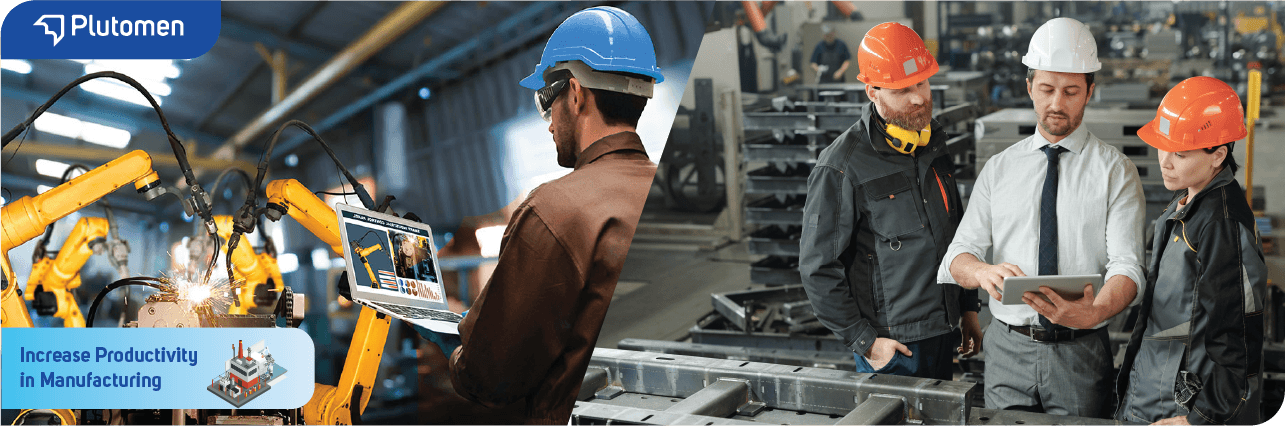
Industrial shop floor productivity has a direct impact on the profitability. To avoid the grim consequences of reduced income, increasing production in lesser time while sustaining quality has become an area of interest for manufacturers. The intensifying industrial competition is another factor demanding manufacturing enterprises to look for ways to increase productivity for their viability and growth.
The Current Challenge With Manufacturing Productivity
In the manufacturing industry, the slow technology adoption results in productivity bottlenecks due to its capital-intensive nature and regulated workflows. Shop floors, heavily dependent on legacy information sharing and communication methods, face inconsistent product and process knowledge sharing. Creating precise manufacturing work instructions can address these challenges, moving away from traditional physical operator manuals and off-line training, which hampers workforce productivity, especially for new workers. This shift is crucial as experts retire and the industry seeks to scale their expertise amidst increasing product complexity and operations.
The Role of Augmented Reality
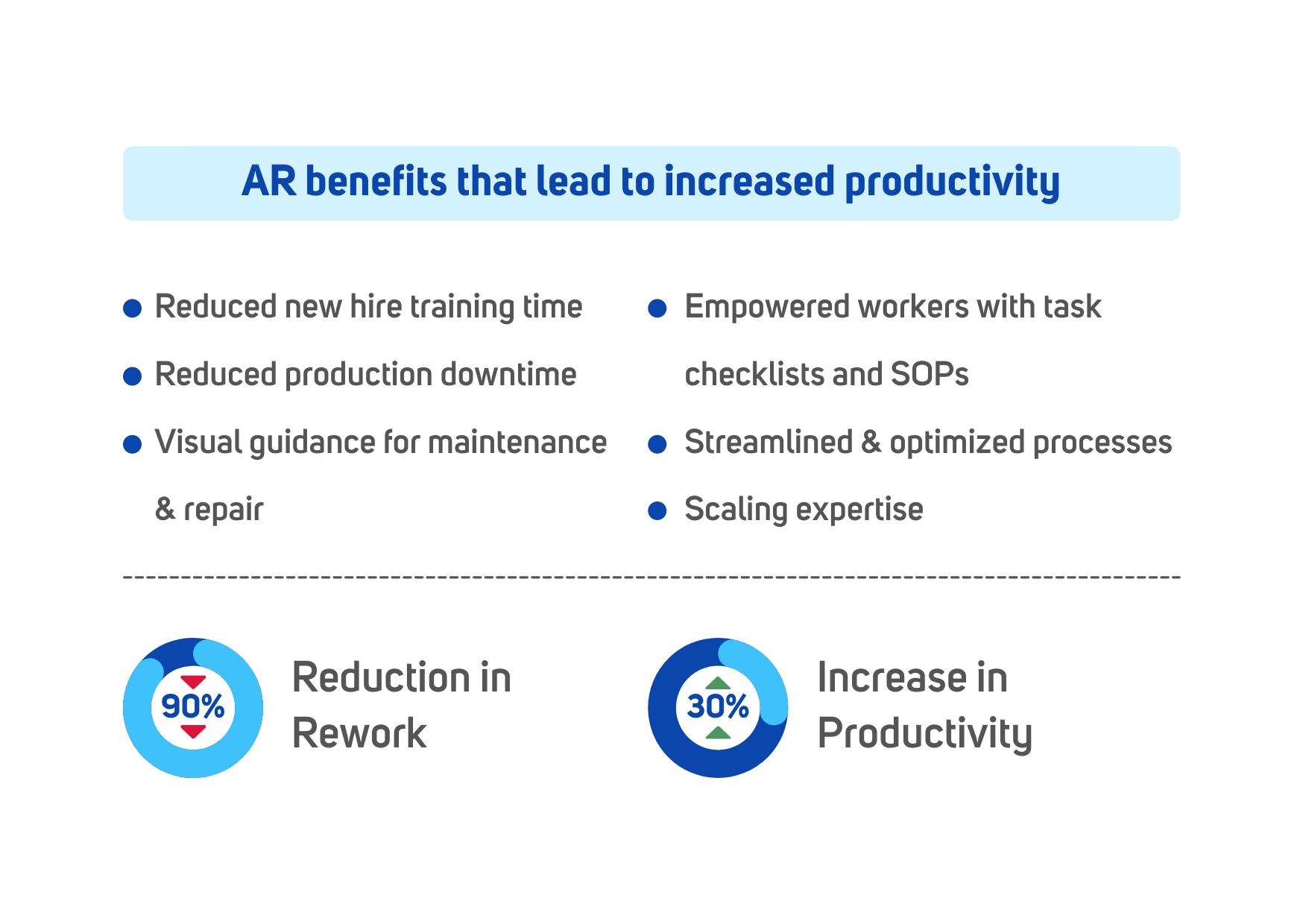
The digitalization in manufacturing with AR increases overall worker productivity by 30% and operational efficiency by 40%. The implementation of AR-based products improves work efficiency, visibility, workforce safety, collaboration across departments and functions while reducing error rates. AR-based products empower manufacturing enterprises to tackle a range of issues including worker skill gap, lack of collaboration among departments, facility downtime, rework & quality spills, inefficient training, and many more. But to achieve this, the benefits of digitalization must be successfully cascaded to the blue-collar workers. AR not only digitalizes the workmen; it also opens a pathway for them to tap on the benefits of other Industry 4.0 technologies.
Ways to Increase Productivity in Manufacturing Through AR
Digitalization of industrial enterprises plays a decisive role in increasing industrial productivity. This can be understood by the outcome of the implementation of digital products and solutions during the most far-reaching disruption in recent times, COVID-19. A report from McKinsey suggested enterprises which resorted to digital tools were able to respond 20-25x faster to changes related to COVID-19 and could enable remote work 40x faster for ensuring sustained productivity.
Let’s see the top 6 ways of increasing manufacturing productivity and explore the role of digitalization through AR in it.
- Upskilling workforce
The periodic changes in products, workflows and increasing complexity leads to skill gap in workers. It’s irrational to expect an increase in productivity if the workforce doesn’t get trained promptly. AR based products enables next-gen upskilling and digitalization of the learning process for the workers. It accelerates and enhances on-the-job training, upskills them with everchanging trends through animation and insight-based media like videos and illustrations.
- Enhanced maintenance
Timely maintenance activities reduce the probability of downtime due to machine breakdown. Even planned and unplanned maintenance downtime adversely affects the productivity. In other words, productivity can be increased of planned maintenance can be completed sooner and unplanned downtime can be resolved sooner. AR-based products allow maintenance from remote locations using integrated checklists for error-free and faster completion. Similarly, downtime reasons like machine breakdown can be identified and fixed remotely for resuming production.
- Efficient team collaboration
Efficient communication and seamless collaboration among different functions at a manufacturing facility are the foundation of productivity. The workmen are required to be updated with changing production methods and should receive immediate guidance when they are stuck in a complex process to avoid any interruption in production. Expert guidance through video collaboration and AR instructions presented as 3D digital assets help resolve complex tools challenges and are effective way to communicate changes.
- Reducing rework and wastage
Quality spills will either lead to rework or wastage of the product, diametrically impacting the productivity. There is no point in producing more if it cannot be sold. The repercussions of quality spills and scrap are wastage of time and money, both indispensable factors for productivity. If compliance and quality checks could be increased, the final product would be meeting the standards. AR products enable remote inspection of factory floor, assembly line, testing line, and quality check audits and eliminates non-compliance through compliance SOPs and checklists to boost quality.
- Upgrading current workflow
Workflows and SOPs require frequent amendments with the change in processes. A thorough study of existing workflows allows identification of processes which, when worked upon, can help improve productivity. The digital form of these work instructions is more accessible and convenient for the workers. The updated workflows and SOPs can be created and saved in AR-based products for ensuring availability to all. The quicker availability of workflows is required in two situations – at the time of change in production process and at the time of update in process for increasing productivity.
- Equipment utilization
More equipment than necessary would mean extra storage space. Likewise, less equipment than necessary put extra load on working equipment, running the risk of breakdown. However, less than full utilization of equipment in manufacturing is a common occurrence. Appropriate utilization of equipment to their full capacity would lead to more productivity. With AR products, it’s possible to monitor equipment and inventory from remote locations and an unskilled worker can be guided on how to ensure 100% utilization of the equipment.
Since 2016, Plutomen has been helping industrial enterprises digitalize through its AR products. Our products enable industries like manufacturing significantly improve worker productivity and safety. Check out our different AR-based products and click here to request a demo of the product from our expert.

Hiren Kanani
CTO, Cofounder of PlutomenWith 10+ years of experience, Hiren Kanani has helped Plutomen ensure smooth communication between the company and its clients for swift project delivery with fewer iterations. He is the CTO and founder of Plutomen.



![What is the difference between AR, VR and MR? [+Use Cases]](https://pluto-men.com/wp-content/uploads/2019/04/Difference-between-AR-VR-MR.png)