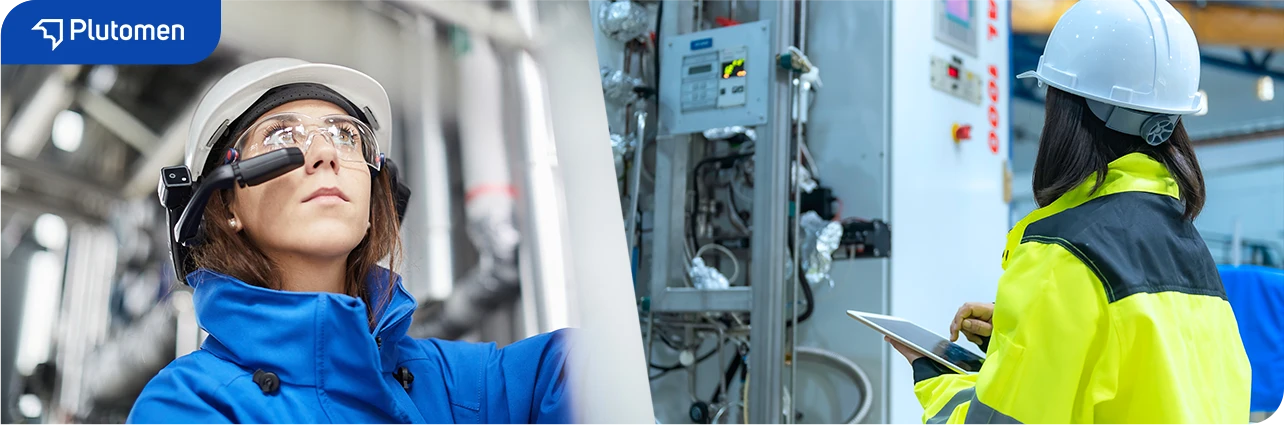
In the era of Industry 4.0, numerous industrial enterprises are adopting various kinds of digital solutions to optimize production in an ever-increasingly competitive world. Hence, industries have begun incorporating Augmented Reality (AR) in their operations, fostering increased productivity, improved quality, efficiency, workplace safety, and other significant benefits. With advanced ways of presenting information, AR is replacing traditional paper-based instructions with projection-based systems.
“The Global Augmented Reality Market size is projected to reach USD 88.4 billion between 2023 to 2026.”
Industrial AR is on the rise, and its growth is remarkable. Implementing an AR in the industry requires proper planning, and if you are looking for Industrial AR solutions this article is for you. We will highlight all the critical aspects and use cases of AR, along with its benefits and solutions. But first, let’s see what is Industrial AR:
Key Applications of Industrial Augmented Reality
Industrial Augmented Reality can be used in numerous ways across various industries, enhancing productivity, efficiency, and safety. Some key applications include:
Assembly and Manufacturing
With AR, assembly workers can connect and cooperate with other experts from across the globe by taking visual-guided instructions to work on and fix issues instantly. This not only fosters continuous production but also enables non-disruptive performance.
Training and Skill Development
Augmented reality solutions enable immersive training scenarios, which allows manufacturers to create a simulated environment without physical equipment and materials.
New workers may be effectively and safely trained in all critical industrial processes also how to handle complex machinery and equipment. It enhances hands-on learning and helps in the training of new workers, reducing the training time.
Quality Control
During the manufacturing process, AR systems can detect any flaws or deviations in real time. A worker wearing AR-enabled devices like AR glasses can help a quality control inspector see a high-quality, 360-degree view of a product or unit from all angles. Product visualization improves manufacturers’ ability to prevent faults throughout the manufacturing process as well as view and effectively resolve any kind of defects.
Industrial Augmented Reality: Different types of AR for Industry
There are three main types of Industrial AR, each designed to meet certain needs and requirements. For an organization to get the greatest benefits, choosing the right kind of augmented reality is essential. Selecting the appropriate kind of industrial augmented reality ensures a greater benefit as it corresponds with your own objectives and requirements.
Using Devices Like a Tablet or Phone
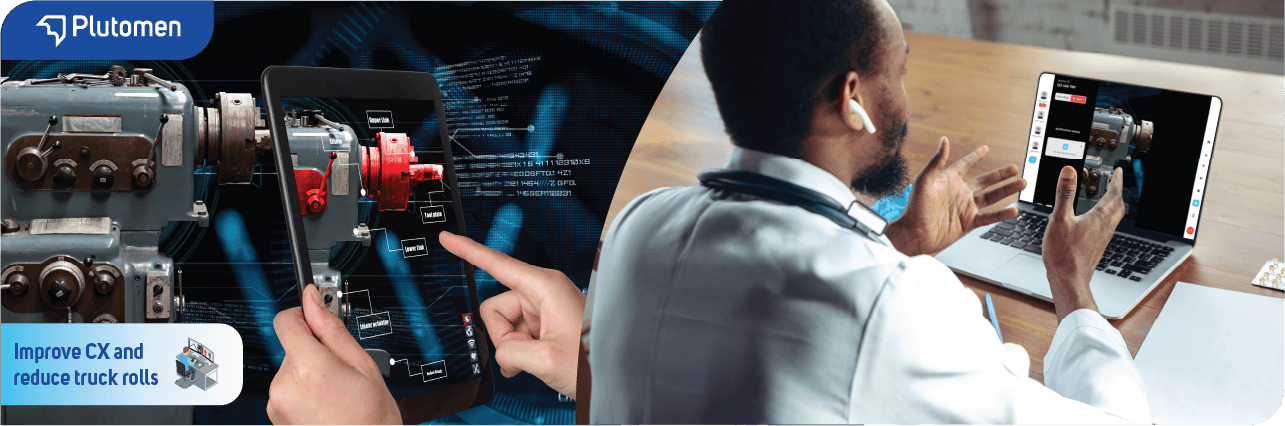
This is the most basic way in which AR is used in industries. Workers can use their smart devices like tablets and phones to superimpose graphics on real-world objects for better understanding. This entire functionality is achieved through an AR app. There are several AR solutions out there that allow you to achieve the same functionality.
Though the handheld device-based AR solutions are easy to adapt to, there are some minor cons to it. First, if the workers need to use both their hands to perform the task, the use of these devices will not be convenient. Moreover, these devices run on batteries. Hence, the issue of low power always stands active. Lastly, these devices rely heavily on a consistent internet connection.
Projection-based Augmented reality
Projection-based AR is by far the most advanced and best. Why? Well, in this, there is no need for any specific device. Projectors and vision sensors are used to project work instructions on the work surface. However, the catch here is that the instructions are projected one at a time.
The best thing about projection-based AR is that there is no issue of battery power or WiFi connectivity. On top of this, projection-based AR is used in tasks like part picking, assembly, inspection, and training. Though there are necessary aspects of projection-based AR, it is not well adapted as of now.
Wearable Devices Augmented Reality
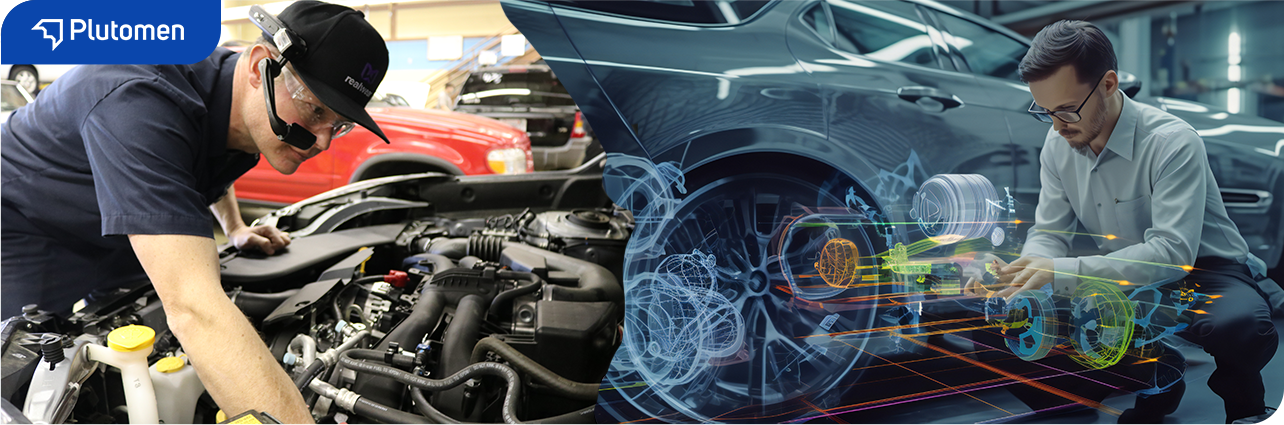
Wearable device-backed AR is the most convenient way of implementing Augmented reality in your industry. Unlike projection and device-based AR, wearable device-based AR is the most convenient way of using the technology. In this AR module, both the hands of the workers are free as all the graphics and instructions are projected on smart glasses or headsets.
The unique thing about wearable-based AR solutions is that they have the capability of remote access and collaboration. It means that the engineers in remote locations can share pictures and videos with supervisors to keep them updated on the progress and also to seek help. The live view is visible at both ends at the same time.
A minor con of wearable-device-based AR is the battery backup and the extended use that can cause eye strain.
Steps For Implementing AR Solution
When it comes to picking an AR solution for your industry, there are numerous factors to consider. This is not a one size fits all scenario. Below are some steps you should consider before implementing AR in your industry to achieve the best outcome!
Step-1 Uncovering the Business Case
The very first step is to identify the precise organizational pain areas that augmented reality may effectively solve. Challenges such as a retiring workforce, inadequate training programs, and complex products can be reduced by augmented reality. Providing remote guidance, virtual demonstrations, and step-by-step visual guided instructions enhances workforce efficiency and bridges knowledge skill gaps.
Step-2 Fostering Communication and Collaboration for Optimal Outcomes
Involve subject matter experts early in the development of Augmented Reality (AR) solutions, and use a collaborative approach to installation, quality control, and project assessment. Recognize front-line employees and contributors throughout the company, keeping roles and due dates clear. Effectively convey the advantages of the AR project, showing it as a transformation initiative, and win over important decision-makers with compelling demonstrations. The early collaboration has an impact on more extensive digital transformation initiatives.
Step-3 Start by Focusing on Short-Term Wins
The third step of implementing augmented reality focuses on keeping your goals simple and straightforward. Businesses may gain from implementing AR for increasing manufacturing efficiency by beginning small and making sure that AR experiences are simple & beneficial. The focus should be on resolving specific issues, such as reducing unnecessary machine downtime. In addition, try to avoid unnecessary information that can divert workers, instead create the work instructions which are simple and easy to follow.
Step-4 Emphasize User Experience
Ensuring an optimal user experience (UX) is essential for the effective use of Augmented Reality (AR), in both commercial and non-commercial settings. Apart from enhancing workers’ efficiency in completing jobs, the augmented reality user experience must be simple, easy to understand, and reliable. Moreover, it is crucial to take into account the hardware effect because the AR application’s appearance, usability, and accessibility are all impacted by the choice of wearable headsets, smartphones, or tablets. A user’s field of view must be understood for an immersive experience, as most information is processed visually. To ascertain their influence on the AR deployment, each device’s specifications—such as price, usability, and capabilities—must be considered.
Step-5 Essential Features to Ensure in an AR Solution
When evaluating Augmented Reality (AR) solutions, there are several key features to consider like:
Real-time Analytics and Visual Support
The very first thing that you need to ensure in an AR solution is this one. You see, you cannot be available at all the locations at all times. Hence, you must ensure the software has real-time analytics and visual support in your industry.
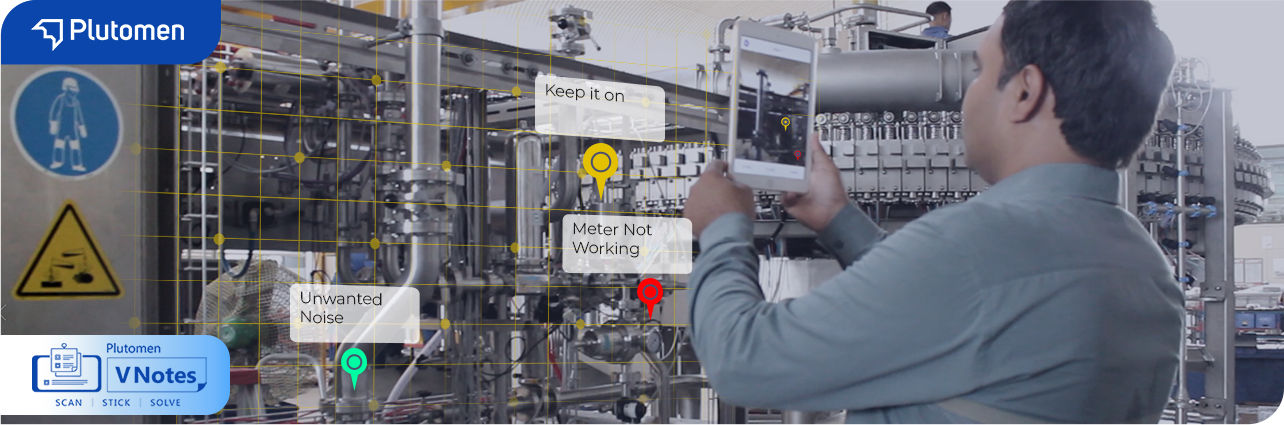
Real-time machine data can be analyzed to ensure the smooth working of the machine. Further, real-time data like annotations and visual elements can be added to the view of the technician’s wearable devices to help them repair and assemble machines.
Object Detection and AR Instructions
In AR software, a unique feature allows it to detect 3D objects and machines. Make sure that the software you choose for your industrial operations has this feature. The AR software you choose should be able to detect 3D objects and provide you and your staff with AR instructions.
Multiple Device Compatibility
What makes a convenient AR tool? The best AR tool is the one that has multi-device capability. As your industry workers may have different devices like a phone, tablets, etc., your AR tool must be compatible with all of them. Having a tool like this also allows you to use different types of devices, like wearable glasses.
Employee Collaboration
An AR solution should have the capability to help your industry staff collaborate seamlessly with each other. Therefore, look for a tool that has cloud services. No matter where your staff is in the world, cloud technology can be of great use as it allows you to provide specific access and control to your staff over specific information.
Compatibility with Legacy Systems
Now, all of the machines in your factory may be new. Many of them would be old legacy machines. To implement AR, there are two ways here. You either need to purchase new machines and replace the old ones or have a solution that is compatible with legacy systems. There are many AR solutions that can work well with legacy systems. Hence, go for the compatible one.
Best Industrial AR Solutions
As you are well-versed in the things that you need to keep in mind while choosing an AR solution, let’s move ahead and check out some of the best industrial AR solutions!
Plutomen Connect
Let’s begin with the best AR solution for your company, Plutomen Connect! It is an AR solution enabling frontline workers to remotely resolve issues by connecting with an expert. There are various powerful features that it provides the frontline workers, such as
- The tool overlays digital information on real-world objects that guide technicians with instructions from the experts.
- It allows workers to connect with the experts remotely via video conferencing or AR. Thus, saving time and money.
- The tool also has a chat feature to allow technicians to chat with each other for assistance during work.
- It provides you with data analytics features by collecting data on the usage of tools.
Augmentir
Just like Plutomen Connect, Augmentir is also a software platform that allows companies to boost the safety and productivity of their frontline workers. There are several connected tools that optimize all the frontline processes.
- The collaboration tools allow the workers to share information with each other.
- You receive alerts based on the issues by which you can track and manage quality and maintenance.
- You can connect with experts remotely using Augmentir.
Vuforia Engine
Vuforia Engine is an awesome SDK that can be used to create stunning AR apps for your frontline workers. These applications can be used on phones, tablets, and head-mounted displays. The computer vision technology of Vuforia Engine helps in various ways, such as
- Tools created by Vuforia Engine can help in product visualization. It can be helpful for businesses that want to showcase their products to customers.
- You can curate tools that can help you train your employees on using any equipment. It can improve productivity and save time.
- With computer vision technology, Vuforia can help you create stunning AR games.
Help Lightning
Help Lightning is another cloud-based solution that helps frontline workers handle complex assembly and repair tasks with remote expert assistance. You can use the Help Lightning solution on different types of devices and across several industries like manufacturing, construction, and energy.
- The solution provides hyper-quick merged reality so that you can see the augmented view as quickly as possible.
- You can get visually guided chats that include images, videos, and PDFs that can help workers resolve the issue quickly.
- Powerful value analytics can help you understand the metrics and, based on that, the areas of success and improvements.
What are the Various Benefits of Industrial AR Solutions?
The benefits of AR solutions are off the charts. Though there are many of them, here are some of the prime ones!
Object Recognition
AR solutions can help users to identify objects in the real world. This can be helpful for a variety of tasks, such as maintenance, assembly, and training.
Lower Cost and Risk
AR solutions can significantly reduce costs and risks. For instance, Augmented Reality can be leveraged to provide remote assistance to workers, which can reduce truck rolls. This can save businesses capital on travel expenses and help reduce the risk of accidents.
Increases Worker Engagement
With AR solutions, you can make the work for workers more engaging. As an example, you can create training simulations for the workers that can help them learn better.
Enhances Productivity
With the instructions or guidance produced using AR, AR can help workers to complete tasks more efficiently. This consequently improves the productivity of the frontline workers.
Enhanced Assembly Assistance
Industrial AR solutions provide step-by-step instructions, making it easier for assembly for frontline workers to follow instructions accurately. This minimizes assembly time and increases efficiency.
Error Reduction
Augmented reality solution prevents errors during assembly by providing real-time visual instructions and can highlight potential issues through AR annotations. This enhances worker’s efficiency and productivity while significantly reducing errors.
Empower your Workforce with Plutomen’s Industrial AR Solutions
In conclusion, Industrial Augmented Reality isn’t just a technological leap; it’s a revolution. By intertwining the digital and physical, AR empowers industries to operate at unprecedented levels of efficiency and safety. As we witness this transformation, it’s evident that the future of industry lies in the immersive experience provided by Industrial Augmented Reality Solutions. These solutions not only improve your business workflow but can also provide a more efficient, safer, and productive work environment. Plutomen’s industrial augmented reality solutions are designed to help industries achieve these goals by providing a comprehensive suite of tools that can be tailored to their specific needs. With Plutomen, industrial enterprises can:
- Increase resolution time with AR powered remote collaboration.
- Decrease Human Errors and Increase Productivity by Digitized Work Instructions;
- Increase training time to 3X by leveraging 3D immersive self-assistance training;
Furthermore, by leveraging augmented reality solutions, an organization can not only improve maintenance and inspection processes but also enhance workers’ productivity. It’s high time for organizations to prepare for a future that promises to be more interconnected, efficient, and data-driven.
Frequently Asked Questions

Hiren Kanani
CTO, Cofounder of PlutomenWith 10+ years of experience, Hiren Kanani has helped Plutomen ensure smooth communication between the company and its clients for swift project delivery with fewer iterations. He is the CTO and founder of Plutomen.