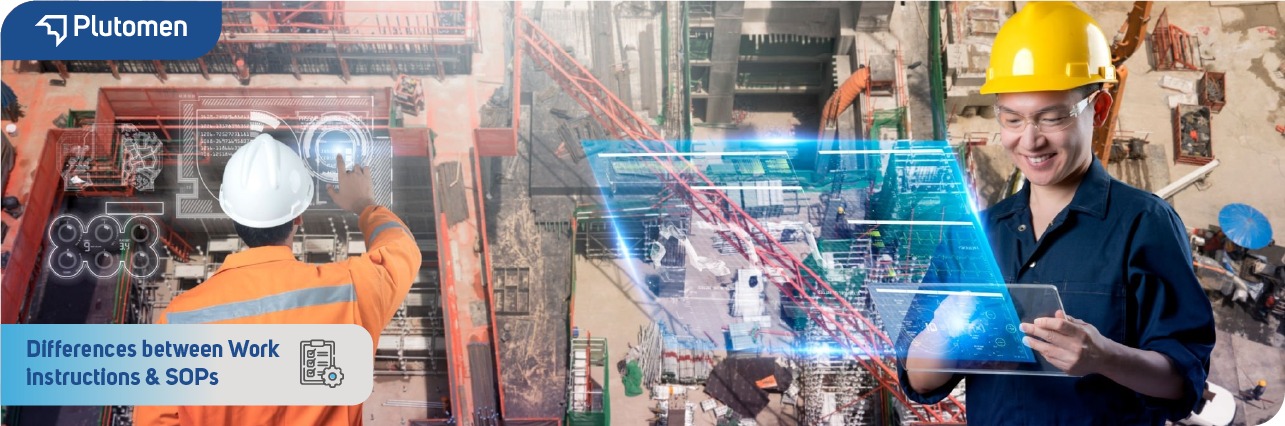
In the era of advanced technologies like AI, Blockchain, AR, etc., impacting every aspect of each industry, the overall industrial landscape is undergoing a transformative shift. From precision engineering to intricate manufacturing processes, the integration of groundbreaking technologies has become the cornerstone of modern industrial operations.
However, amidst this digital evolution, the traditional approaches have been exposed to certain pain points, presenting challenges that impact efficiency and productivity.
As industries grapple with complexities, the traditional methods of relaying instructions and guiding manufacturing processes have faced limitations. Moreover, the old paper-based instructions, once the cornerstone of operational guidance, have proven to be increasingly inadequate in meeting the demands of today’s intricate production environments.
The need for a more dynamic, interactive, and efficient solution has given rise to the pivotal concept of 3D work instructions that have an elevating market.
3D Work Instructions: What Are They?
In a time where the cost of unplanned downtime in the manufacturing industry is in trillions, reliance on paper-based instructions would not be a smart choice for any business owner. There is a report by Siemens that says the Fortune 500 companies faced unplanned downtime, costing them around $1.5 trillion.
This number is enough to shock any business owner and make them realize the need for 3D work instructions.
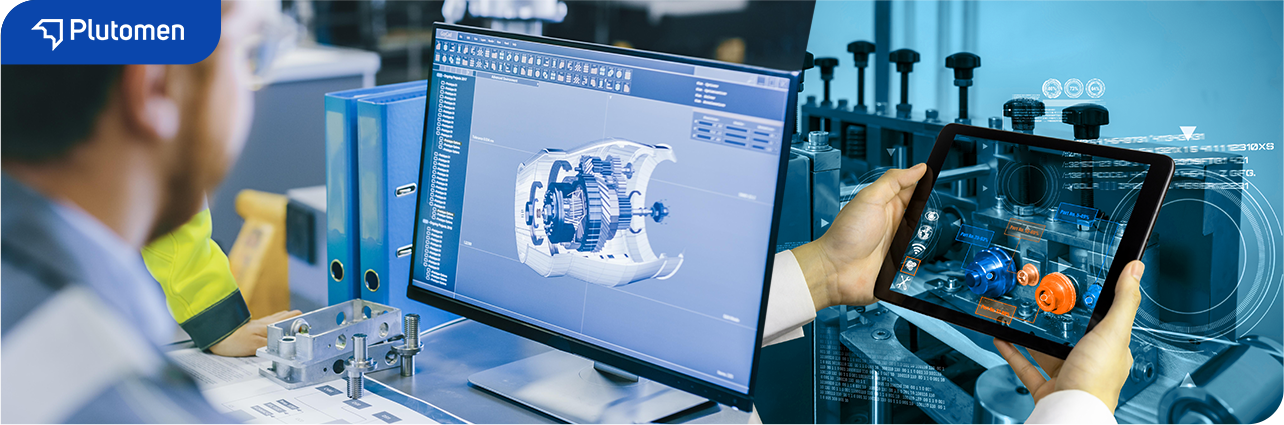
3D work instructions are comprehensive guides that utilize three-dimensional models and visual aids to illustrate complex tasks or processes. These instructions offer a detailed walkthrough of each step, enhancing comprehension and reducing errors in execution. You can rotate, zoom, and see things from different angles. They help people understand complex stuff better. These instructions often use computers or animations. They make training easier and reduce mistakes.
Unlike digital work instructions, which are just step-by-step text/ media based instructions, 3D work instructions are interactive animations that explain intricate details of a complex visual process. These instructions can be easily accessed via the internet on any device and by any member of the industry floor. The changes to these instructions can be easily made on the spot, making it readily accessible to everyone. Lastly, it can be used easily by workers of any level of expertise.
Cons of Paper-based Work Instructions that 3D Work Instructions Solve
There are several drawbacks of paper-based work instructions that 3D work instructions solve. Here are some of them!
Interactivity
Paper-based work instructions only had text and static images. No matter how detailed, they were difficult to comprehend sometimes.
With 3D work instructions, workers and engineers can manipulate 3D models, zoom in on details, and engage with the instructions more hands-only.
Lower Complexity
Paper-based work instructions included static images with intricate details that were difficult to study. On the other hand, 3D work instructions provide step-by-step animations of machine parts in detail. Thereby leaving no chance of missing anything.
Risk of Error
As complex work instructions are written in text form with static images, they can be tough to comprehend, consume time, and consequently increase the risk of error.
On the other hand, 3D work instructions provide you with more interactive imagery and 3D animations that make processes like product assembly and manufacturing easy. Thus reducing errors.
Updating Issues
If there is an error in the work instructions, you may have to update them for one person and all of those who use those instructions. This number can even go into the hundreds, leading to inconvenience.
3D work instructions are stored on the web, so they are easy to update, allowing any worker on the manufacturing floor to access the updated version anytime.
Environmental Effect
Paper-based instructions have to be left to decompose and dispose of.
3D work instructions do not require anything like this as they are completely online.
Importance of 3D Work Instructions
Several technologies play a critical role in making 3D work instructions. Some of these advanced technologies are Virtual Reality, Augmented Reality, Cloud Computing, 5G, etc.
The collective power of all these technologies helps in creating interactive 3D work instructions that can be used for the following processes.
Skill Enhancement
If we put adaptability to change challenges out of the picture, 3D work instructions can be super useful in skill enhancement. Many workers would not upgrade their skills due to the complexity and unavailability of proper training programs.
However, with 3D work instructions, workers can seamlessly upgrade their machine handling and assembly skills, leading to better productivity.
Prototyping
3D work instructions include detailed and high-graphic 3d visualization of complex machinery. With CAD designs of such machines available on your device, workers can prototype the machines easily.
3D printing is an exceptional technology that can work parallel to 3D work instructions to help you create an ideal prototype. Thereby reducing defects in manufacturing.
Remote Troubleshooting
In a remote area where phone communication is not possible, repairing the equipment can be challenging. In such a scenario, on-device work instructions can come in handy.
Workers can just open the app, refer to the step-by-step visual and 3D work instructions, and fix the issue there and then. This helps in saving transit costs and time.
Training
With the advancement in technology, finding workers with the right set of skills is challenging. This is where 3D work instructions can be helpful. With well-designed 3D work instructions to handle industrial processes and machines, you can create advanced training programs to train unskilled workers quickly.
Moreover, these 3D work instructions can also help enhance your existing workforce’s skills.
Verizon is a great example of using AR remote assistance and 3D work instructions in training. The brand uses augmented reality for maintenance and repair. This helps the firm improve its training process, save costs, and improve overall productivity.
Quality Assurance
One of the benefits of 3D work instructions is the reduction of errors. With immersive and interactive 3D models and animations, workers can use 3D work instructions to assemble or manufacture the product. As 3D work instructions are super accurate, detailed, visually clear, comprehensive, and updated per the latest requirements, the chances of error are significantly reduced. This leads to better product quality.
Let’s take an example GE Aviation empowered their workers with work procedures that could be fed into the augmented reality glasses. The initiative led to remarkable improvements in their worker’s performance. 85% of them even believed that it would reduce errors resulting in better product quality.
Maintenance, Repair, and Assembly
Maintenance and repair of machinery located in distant and remote areas can be challenging without work instructions. Even if you are a professional, mindlessly turning off pages of the instruction manual can lead to frustration and consume extra time in issue resolution. Visual or animated work instructions can serve great utility here.
Visual instructions with text, animated images, and 3D models of the equipment can help the technicians grasp the instructions quickly. Thereby leading to faster repair and maintenance. The same is the case with the assembly of any industrial machinery.
Here is an example:
Huawei Technologies uses a state-of-the-art solution to develop AR-enhanced installation and inspection instructions for their maintenance field technicians.
Benefits of 3d Work Instructions
The utility of digital work instructions is wide, and so are its benefits. Here are some of the top benefits of using 3D work instructions.
Better Visual Communication
3D work instructions have interactive diagrams, 3D models, and even animated diagrams of machines and their parts. The availability of all of them, along with text-based instructions, allows for better visual communication. Workers on the floor can easily handle assembly, quality testing, packaging, and other manufacturing processes.
Faster Task Completion
Like paper-based instructions, 3D work instructions do not include juggling through several manuals and their pages. With interactive work instructions on the go on your smart device, you can handle any industrial task easily and fast.
Enhanced Safety
Some industrial tasks may include handling heavy machinery. Some workers, such as the new ones, might not know how to use it. With 3D work instructions, they can learn to operate such heavy machinery with enhanced safety.
Seamless Sharing and Updating
Paper-based work instruction manuals may take forever to update. For example, if there is any error in the manual, it would need to be reprinted again for multiple workers, costing you both money and time.
On the other hand, 3D work instructions do not require such things. A system admin can update the instructions online and share them wirelessly with all the floor workers.
Increasing First-Time Fix (FTF) Rates
3D work instructions contribute to higher FTF rates by providing comprehensive guidance that reduces the need for repeated attempts to complete a task correctly. As a result, problems are resolved more quickly and reduce the chances of defects or rework. Visual work instructions leave no room for doubt or interpretation.
Closing the Skills Gap
3D work instructions can play an essential role in closing the skills gap by offering a more intuitive and accessible way for frontline workers to acquire and apply knowledge. This is especially beneficial in industries facing challenges related to an aging workforce or rapid technological advancements.
Productivity
Paper-based instructions can keep you on the task for a long time as they may be difficult to comprehend, affecting productivity. Visual work instructions allow you to learn and operate on a task faster, automatically increasing productivity.
Real-life 3D Work Instructions Case Study
Several brands worldwide are using 3D or visual work instructions to handle their industrial processes. Here are some interesting case studies that I found.
Boeing
Boeing is a US-based multinational corporation that designs and manufactures airplanes. Keeping the complexity of wiring in the airplane in mind, Boeing leveraged the power of AR digital work instructions.
Unlike the traditional way, where technicians would be required to repeatedly pay attention to check the diagrams and schematics of the plane wiring, AR keeps it simple. AR allowed Boeing to present schematics and diagrams directly in the smart glasses themselves, leading to a 25 percent cut in the wiring production time.
Industries Benefiting from 3D Work Instructions
Today, the use of 3D work instructions is across several industries. Here are some industries that are particularly benefiting from 3D work instructions:
Manufacturing
Manufacturing industries like Boeing, General Electric, Lockheed Martin, etc., use digital work instructions for their manufacturing processes. From assembling and maintaining aircraft components to assembling wind turbines, 3D work instructions play a critical role for these manufacturing giants.
Healthcare
When it comes to Healthcare, digital work instructions, or 3D digital models, are used by Healthcare experts to analyze human anatomy. For example, Sygnature Discovery Uses Augmented reality to visualize the drug’s molecular structure and make changes to it.
Medtronic is another healthcare company that saves on training costs with the help of Augmented reality work instructions.
Aerospace
Aviation or aerospace companies like Boeing use 3D work instructions and visual work instructions to help the workers seamlessly install the aircraft’s wiring. This not only saves effort but also saves time. There are other companies, too, such as Lockheed Martin and Airbus.
Key Components of 3D Work Instructions Software
So far, I have discussed that 3D work instructions are the core for industries these days. However, if you plan to buy 3D work instructions software, you must ensure it has all the necessary components.
3D Models Visualisation
When you are choosing a 3D work instructions software, ensure that it has features for 3D model visualization. 3D model visualization includes representing different machine models along with their individual components and processes. The software should also be able to import 3D models in all formats.
Multimedia Integration
Text-based work instructions are good. But they can be much better with multimedia integration, including videos, images, and animations. The combination of these visual elements and text provides better clarification to the workers of specific steps or details of the tasks.
Step-by-Step Guidance
Verbal communication can never beat detailed step-by-step written communication. Therefore, in 3D work instructions, along with highly detailed images and animations, also check for step-by-step instructions. The images would display the elements, whereas the steps would tell you exactly what to do and how to do it.
Get the Best 3D Work Instructions With Plutomen Assist
3D work instructions have revolutionized factory floors, transforming complex tasks into clear, engaging guides. Unlike traditional paper instruction, visual work instruction can be easily updated and shared with other workers. As a result, it can help to improve efficiency and reduce mistakes. With Plutomen Assist you can import 3D models, create step-by-step instructions, and publish them to entire department silos in your factory.
By simply scanning a QR code on the machine, you can get 3D work instructions instantly on your device. On top of that, you can just click the picture of a physical machine and get a highly detailed 3D model of it. You can experience the models in AR and VR simulation. Besides, you can also use Plutomen Assist with smart AR glasses.
Streamlining Processes with 3D Work Instructions
Discover how 3D work instructions can enhance your productivity and optimize operations!
Request DemoFrequently Asked Questions

Ravi Patel
Chief Design Officer (CDO) at PlutomenWith 12+ years’ experience in enterprises, Ravi holds expertise in designing user-friendly and experience-enhancing interactive environments based on emerging technologies. He is designated as Chief Design Officer at Plutomen.