Quality issues can have a substantial influence on production, cost, and customer trust. Even minor errors in businesses such as manufacturing, utilities, and field services can result in equipment failure, safety hazards, or operating delays.
Quality control checklists are one of the most effective ways for organizations to maintain consistent quality standards. These checklists assist teams in doing systematic inspections, ensuring compliance with standards, and detecting faults before they become major problems.
In this guide, we will explore what a quality control checklist is, why it is important, and how organizations can create effective QC checklists to improve inspection processes.
In this guide, we will explore:
- What are quality control checklist
- Why are QC checklists important
- How to create quality control checklists
- Examples of quality control checklists
- How digital platforms like connected worker technology improve quality inspections
What Are Quality Control Checklists?
A quality control checklist (QC checklist) is a structured document that lists the exact product requirements, measurements, functional checks, visual standards, and materials required to validate product quality.
A robust QC checklist ensures that:
- Every inspector checks the same criteria
- Every product is evaluated consistently
- Quality deviations are caught early, before they spread
- Compliance requirements (ISO, GMP, industry standards) are met
- Traceability and documentation are always available
In most of the factories, quality control inspection checklists are used at multiple stages of production, such as incoming inspection, in-process checks, final inspection, and packaging/shipping validation.
Why Are Quality Control Checklists Important?
Using a structured checklist offers multiple advantages:
1. Prevent Poor Quality Before It Escodes
When problems pass through inspection, it causes rework, machine downtime, consumer complaints, and, in certain cases, recalls.
Studies show that the cost of poor quality (COPQ) can range from 5% to 30% of total revenue, highlighting the importance of structured quality control processes.
2. Protect Compliance and Traceability
Industries like automotive, aerospace, and healthcare operate under strict standards.
Missing a single check can lead to non-compliance, audit failures, or product quarantines. Check sheet in quality control is used to collect and record data during inspections or production processes.
QC checklists create a reliable record of:
- What was checked
- Who performed the inspection
- When it was completed
- What was the outcome?
This audit trail becomes invaluable during investigations or customer inquiries.
3. Strengthen Supplier Quality Management
If raw materials or components fail to meet standards, downstream processes suffer. QC checklists:
- Validate supplier materials
- Verify certifications and lot numbers
- Highlight recurring supplier issues
- Strengthen communication with vendors
This ensures that poor-quality materials never enter production.
4. Reduce Human Error and Waste
When operators rely on memory or ad-hoc inspections, inconsistencies and mistakes rise.
A QC checklist creates procedural reliability, reducing scrap, rework, defects, and production delays.
Nearly 90% of product failures are linked to quality control issues, emphasizing the need for standardized inspection processes.
5. Enhances Productivity
Structured inspections help workers complete tasks faster and with fewer mistakes, enhancing workers’ productivity.
How to Create a Quality Control Checklist
Creating a quality control checklist involves more than listing inspection points. These quality checklists are most effective when aligned with standardized work instructions and clearly defined frontline workflows. Based on best practices and quality‑management standards, a robust QC checklist should cover five key areas:
Step 1: Product Specifications
Before anything else, clearly define what “good quality” means for each product. This QC details includes:
- Materials, construction, and finish requirements
- Dimensions, weight, tolerances, or functional criteria
- Color, labels, markings, or branding guidelines
- Regulatory or compliance specs (if any)
Ensuring that suppliers and QC teams are on the same page about these criteria reduces misconceptions and ensures that inspections focus on appropriate aspects.
Step 2: Identify Inspection Points
List all components, processes, or conditions that need to be inspected.
Focus on areas that directly impact:
-
product quality
-
safety
-
compliance
-
performance
Subject matter experts and experienced technicians should be involved in this process to ensure the checklist captures all important steps.
Step 3: Break Down Tasks into Clear Steps
Checklist items should be simple, clear, and easy to follow.
Instead of vague instructions such as:
“Inspect machine condition.”
Use specific instructions like:
- Check the hydraulic pressure level
- Verify belt alignment
- Inspect lubrication levels
Clear steps help reduce ambiguity and ensure consistency.
Step 4: Organize the Checklist
Structure the checklist in a logical order so inspectors can easily follow it during inspections.
Tasks should follow a logical sequence, such as:
- Preparation steps
- Inspection tasks
- Measurement verification
- Documentation and reporting
Organizing steps in a structured order helps inspectors complete tasks more efficiently.
Step 5: Include Data Capture Fields
Inspection results should be recorded clearly.
QC Checklists may include fields such as:
- Pass/Fail indicators
- Measurement values
- Photographic evidence
- Comments or observations
Capturing inspection data helps organizations analyze trends and improve quality management.
Step 6: Test and Improve the Checklist
Before implementing the checklist across operations, conduct trial inspections and gather feedback from technicians.
Refine the checklist to ensure it is:
- clear
- practical
- easy to follow
Quality control checklists help standardize QC activities by guiding inspectors through critical checks at each stage of production. From dimensional verification to functional testing and checks in their quality control checklist, ensure products meet defined specifications before moving to the next process or reaching the customer.
Quality Control Checklist for Field Operations (Utilities Example)
In industries like utilities and power distribution, technicians often perform inspections on substations, transformers, and electrical panels.
A typical field inspection checklist may include:
Transformer inspection
- Check oil levels
- Inspect the insulation condition
- Verify temperature readings
Electrical panel inspection
- Inspect circuit breakers
- Verify wiring connections
- Check the grounding system
Safety checks
- Confirm protective equipment
- Inspect warning labels
- Verify lockout/tagout procedures
These inspections help prevent equipment failures and ensure reliable field operations.
Quality Control Checklist Example (Manufacturing)

What are the Stages of Quality Control?
Quality control can generally be divided into four main stages based on when and where inspections occur during a production or operational process.
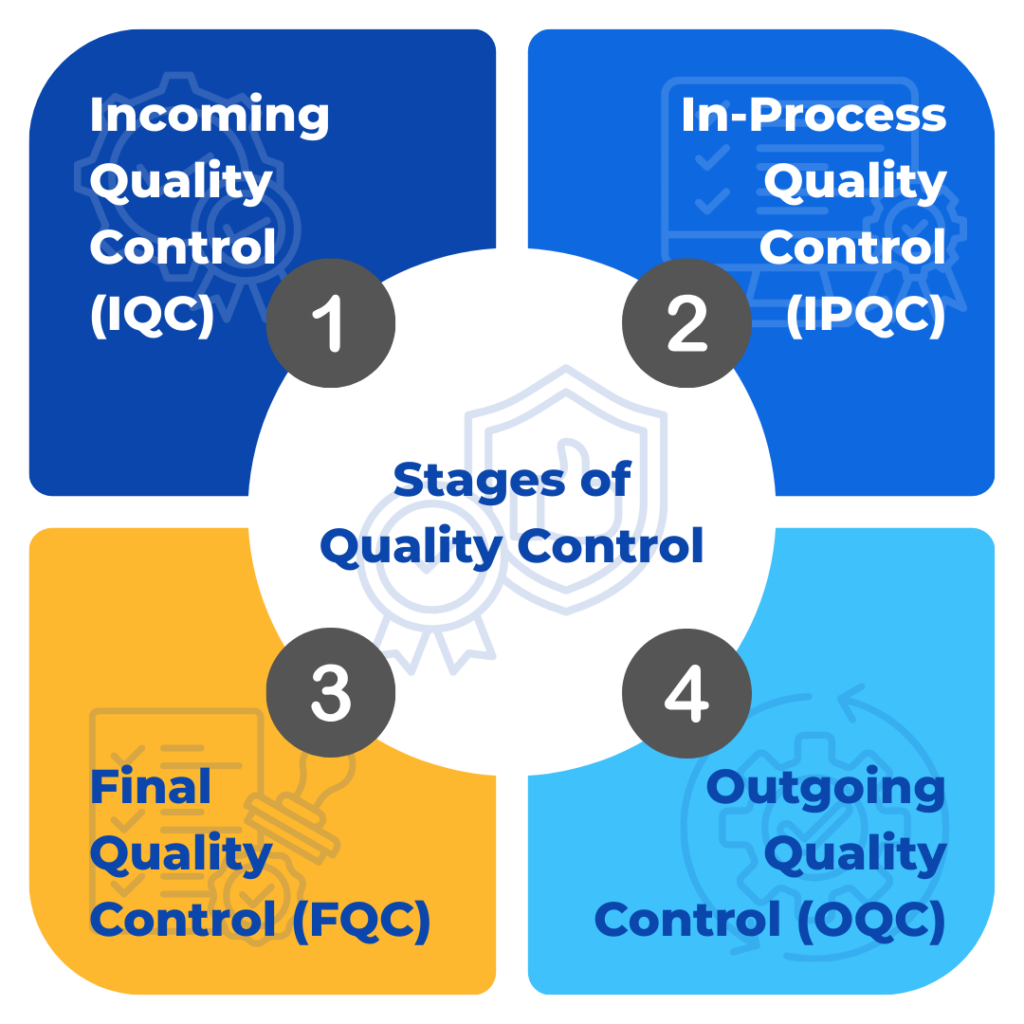
1. Incoming Quality Control (IQC)
Incoming Quality Control focuses on inspecting raw materials, components, or parts received from suppliers before they enter the production process.
The goal is to ensure that incoming materials meet the required specifications and quality standards.
Example checks include:
- Verifying material dimensions
- Inspecting for visible defects
- Checking supplier documentation
- Testing material strength or durability
If issues are detected during IQC, organizations can return or reject defective materials before they affect production.
2. In-Process Quality Control (IPQC)
In-Process Quality Control is performed during the manufacturing or operational process to ensure that production steps are being executed correctly.
This type of inspection helps identify defects early, before the final product is completed.
Examples include:
- Monitoring machine parameter
- Verifying assembly steps
- Inspecting intermediate products
- Checking calibration and measurements
Early detection helps reduce rework and prevents defects from progressing further in production.
3. Final Quality Control (FAC)
Final Quality Control occurs after production is completed but before products are delivered to customers.
This stage ensures that the final product meets all required quality standards.
Typical checks include:
- Product functionality testing
- Visual defect inspection
- Packaging verification
- Compliance with specifications
Final inspection ensures that only products meeting quality standards reach the market.
4. Outgoing Quality Control (OQC)
Outgoing quality control focuses on verifying products before shipping or delivery.
Even if products pass final inspection, OQC ensures that packaging, labeling, and shipment conditions meet requirements.
Checks may include:
- Packaging integrity
- Product labeling accuracy
- Shipment documentation
- Quantity verification
This stage ensures that customers receive products in the correct condition and quantity.
Transforming Quality Inspections with Connected Worker Platform
Modern industrial environments are adopting connected worker technologies to improve inspection workflows.
Platforms like Plutomen enable organizations to digitize quality control processes and provide frontline workers with structured inspection tools.
With digital quality checklists, organizations can:
- Standardize inspection workflows
- Capture inspection data in real time
- Enable photo and video documentation
- Track defects and corrective actions
- Analyze inspection trends
These capabilities help organizations move from manual inspections to intelligent quality management systems.
Best Practices for Implementing Quality Control Checklists
To maximize the effectiveness of quality control checklists, organizations should follow these best practices.
- Train frontline workers on proper inspection procedures.
- Keep checklists simple and easy to follow.
- Regularly update inspection points based on operational changes.
- Digitize inspection workflows to improve visibility and data tracking.
- Analyze inspection data to identify recurring quality issues.
How Plutomen Digitizes & Elevates QC Checklists
Using Plutomen’s connected worker platform can significantly improve the QC process. In addition, they support remote visual inspection, allowing frontline teams to collaborate with experts in real time when quality issues arise.
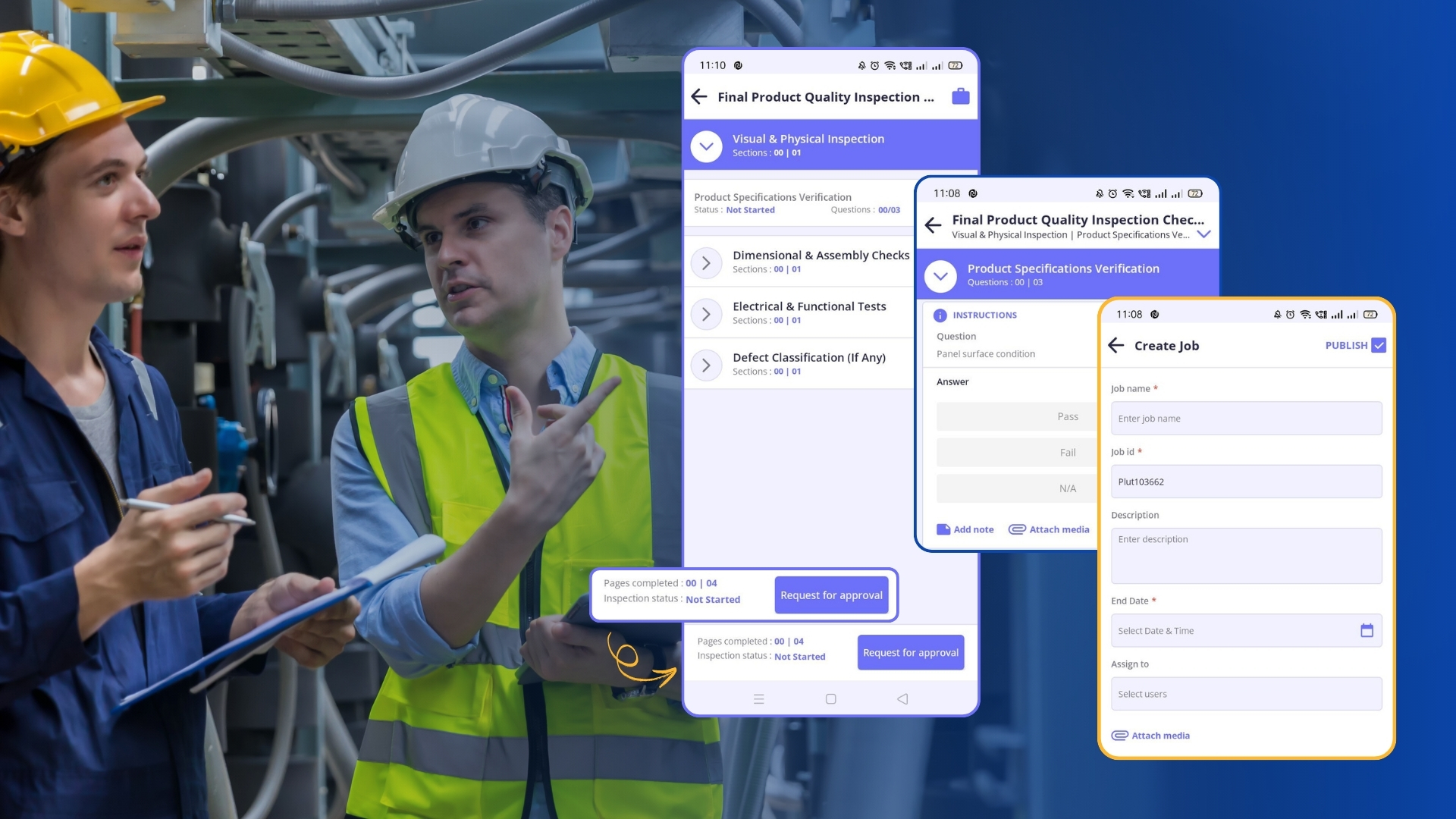
With digital QC checklists, frontline workers can:
Mobile / Digital Access
Inspectors can perform QC checks directly on phones, tablets, and even on AR smart glasses. This eliminates the need for paper-based instructions and makes the inspection process faster, more accurate, and more contextual on the shop floor.
Centralized Data Storage & Traceability
Every quality inspection checklist completed is tagged with the operator name, timestamp, location, and batch/lot details. This is essential for audits and compliance.
Instant Version Control
Any update in product specs, packaging rules, or process requirements can be pushed instantly. It ensures that no outdated forms are used anywhere.
Structured Defect Reporting
Capture defects with photos, videos, severity classification, and annotated markings, helping teams understand and resolve issues faster.
Offline Mode
Inspections continue even in low-connectivity areas; data syncs automatically when online.
Role-Based Access & Accountability
Supervisors, inspectors, and quality managers get separate access levels, ensuring secure & tamper-proof inspection records.
Knowledge Repository
All images, videos, and notes captured during inspections are stored securely.
Final Thoughts
Quality control checklists are foundational to maintaining quality assurance and compliance in industrial operations. While paper-based checklists served their purpose in the past, digital quality control checklists are now essential for organizations aiming to improve efficiency, visibility, and quality outcomes. By digitizing quality control checklists with connected worker technology, companies can empower frontline teams, reduce defects, and build a culture of continuous quality improvement.
Drive Zero-Defect Manufacturing with Plutomen
Discover a smarter way to prevent errors, standardize checks, and improve product quality.
Request a Demo
Frequently Asked Questions

Hiren Kanani
CTO, Cofounder of PlutomenWith 10+ years of experience, Hiren Kanani has helped Plutomen ensure smooth communication between the company and its clients for swift project delivery with fewer iterations. He is the CTO and founder of Plutomen.