
Keyur B
December 28, 2024
13 minutes to read
Updated On : December 31, 2024

The manufacturing industry has long been a key contributor to the economy, driving innovation and creating jobs. However, the industry is currently facing a significant challenge – a labor shortage. Despite the industry’s critical role in the economy, a shortage of skilled workers is leading to job positions going unfilled across the United States.
This labor shortage, also known as the manufacturing skills gap, is a major issue for the industry. The gap exists because there aren’t enough workers with the necessary manual, operational, and technical skills to fill open positions. This is not just a hypothetical problem – many U.S. manufacturing companies are struggling to find workers to fill job vacancies.
According to a 2021 study by Deloitte and the Manufacturing Institute, the skills gap is only going to get worse. The study predicts that 2.1 million manufacturing positions will be left unfilled by 2030, which could result in a loss of about $1 trillion in GDP for the U.S.
The pandemic has only made the situation worse, with roughly 1.4 million manufacturing jobs disappearing at the beginning of the pandemic. Employers have only managed to fill 63% of these jobs with returning employees, leaving 570,000 jobs unfulfilled.
To keep the industry moving forward and support the economy, it’s crucial to find ways to overcome this labor shortage. In this blog, we’ll explore some of the strategies that can help combating labor shortage in manufacturing industry in 2023 & beyond.
A labor shortage in the manufacturing industry occurs when there aren’t enough competent candidates to fill the available roles. It occurs when there is a larger need for labor than there are workers who can fill it.
A decline in workers owing to ageing or birth rates that are lower, a lack of curiosity among the next generation in manufacturing jobs, immigration rules, and the shifting of employment opportunities to other industries are just a few of the causes that might cause a scarcity of labor in the manufacturing sector.
The manufacturing industry is facing a severe causes of labor shortage due to a combination of factors including the aging workforce, low unemployment rate, low wages, lack of skilled workers, and more restrictive immigration policies.
Companies are trying to find alternatives as the baby boomer generation reaches retirement age, and many experienced and qualified professionals are leaving the industry. According to reports, 20% of workers in the UK, 1 in 4 workers in the US, and 22% of workers in Canada are over the age of 55 and work in the industrial sector. In South Korea, 30% of the manufacturing workforce is over 50. This is a significant factor in the manufacturing workforce shortage since it leads to the loss of valuable knowledge, experience, and skills. Filling worker shortage with the necessary qualifications and expertise to fill the vacant roles is also becoming more difficult.
When unemployment is low and skilled labor shortage is on its peak, many people opt to remain in their existing positions rather than take the risk of looking for a new one, making it more difficult for companies to find qualified candidates. This is a significant contributor to the manufacturing labor shortage since it restricts the pool of people that companies can hire from.
The fact that many positions in the manufacturing sector pay low wages is one of the factors causing a labor shortage example. Due to the possibility that individuals could locate better-paying employment elsewhere, this can make it challenging for manufacturing businesses to recruit and retain employees. Low pay can restrict workers from pursuing manufacturing jobs because they may not see it as a long-term career option. It makes it more difficult for businesses to hire and retain employees.
There is a shortage of people with the required qualifications and experience, and many manufacturing roles demand specific skills and knowledge. This is especially true for high-tech manufacturing roles in sectors like aerospace and military, where it is the main reasons for labor shortage. Due to a skill gap, almost 10 million manufacturing jobs are still vacant.
Industry 4.0 has triggered a rise in the need for individuals with tech-related skills like automation and robotics, as many manufacturing companies are investing in technology to increase production and efficiency.
Some companies are not able to attract and retain enough workers due to a lack of competitive wages, benefits, or working conditions.
More restrictive immigration laws may make it more difficult for businesses to hire workers from other nations, worsening the labor crisis. It restricts the pool of skilled individuals that businesses can hire.
These causes collectively have led to the current labor shortage in the manufacturing sector, which does have a bad impact on the manufacturing industry.
Manufacturing companies rely heavily on human labor; thus, when there is a labor shortage, they may need help to satisfy demand and production deadlines. This may result in higher expenses, increased delivery times, and decreased product quality.
The manufacturing sector may be impacted by a labor shortage in a number of significant ways, including:
Companies may have to raise wages and perks when there is a labor shortage in order to attract and retain workers. This may result in higher labor costs, negatively affecting the bottom line.
Businesses may have trouble meeting consumer demands if there aren’t enough workers to meet production demands. Delivery delays can have a negative impact on customer relations and the reputation of the business.
Companies may have to rely on less qualified or experienced people to fill vacant positions when there is a labor shortage. Since these workers might not possess the same level of competence as those with greater experience, the quality of the products may suffer as a result.
Due to the labor shortage, businesses may be forced to use physical labor more frequently, which might result in increased costs and errors.
To solve this problem, businesses must invest heavily on finding new ways to train and support the workforce. Augmented Reality helps the industrial enterprises achieve this through products for next-gen training approach and instant remote collaboration.
1. Technical know-how: This involves understanding of manufacturing equipment, tools, and technology.
2. Problem-solving: In the manufacturing industry, it’s crucial to be able to recognize problems and find quick, effective solutions.
3. Attention to intricate details: Accuracy and precision are necessary for the production process, therefore paying attention to details is a crucial ability.
4. Quality control: A key competency in manufacturing is to make sure that products adhere to stringent quality standards.
5. Safety: Understanding safety procedures is essential while working with large machinery and possibly dangerous materials in the manufacturing industry.
6. Communication: Teamwork and cooperation in the production process depend on effective communication.
7. Time management: Manufacturing sometimes requires meeting strict deadlines, thus effective time management is essential.
8. Leadership: For team management and coordinating tasks in the manufacturing process, strong leadership abilities are crucial.
9. Adaptability: Ability to adjust to novel methods and technologies is crucial because the industrial sector is continually changing.
10. Creativity: Creativity is needed to come up with fresh ideas for streamlining the process of manufacturing and enhancing product design.
11. Inventory control: Controlling inventory levels is essential for effective production processes and prompt product delivery.
12. Troubleshooting: To keep manufacturing processes productive, it’s critical to be able to recognize issues and provide quick, effective solutions.
By giving workers the knowledge and skills, they need to do their jobs well, augmented reality (AR) technologies can help manufacturers overcome a labor shortage. Digital technology is used in AR systems to superimpose virtual visuals over the physical environment and give workers interactive, real-time feedback.
Here are a few ways that AR solutions can assist in addressing the manufacturing challenges related to labor shortage:
One of the most essential steps towards effectively addressing a skilled labor shortage in manufacturing is identifying areas of “bedrock.” These could include specialized skills or competencies relevant to the production line, such as welding or machining, or general skills that all personnel must possess, like problem-solving and effective communication. To tackle this challenge, manufacturers need to implement innovative solutions to labor shortage issues.
By understanding which skills are needed and in what areas, manufacturers can create long-term strategies for recruiting and retaining personnel to meet their technical needs while bridging the skills gap effectively.
Companies in the manufacturing sector can reduce their reliance on human labor and increase productivity and efficiency by investing in automation and robotics as it seems to be the perfect manpower shortage problem. By automating time-consuming and repetitive processes, automation can help employers save on labor expenses by freeing up staff time for more difficult and important work. Automation can also help to increase work consistency and precision, lowering the chance of errors and improving the quality of the finished product. The use of Augmented Reality (AR) can also be used to train employees on how to operate and maintain automated systems, reducing the need for additional human labor. These labor shortage solutions not only address immediate workforce challenges but also position companies for sustainable growth and competitiveness.
Manufacturing companies can lower their workforce requirements by outsourcing non-core tasks like logistics and warehousing. Companies can concentrate on their key skills, such as production and product development, and lower the number of personnel needed to conduct non-essential jobs by outsourcing these functions. This can save expenditures and help with labor shortages.
Companies in the manufacturing sector may make sure that their staff has the skills and knowledge required to complete their tasks successfully. Employees can get practical training through AR-based training programs, allowing them to practice in a controlled setting before taking on real-world activities. By doing this, the effectiveness of the training may be increased, and the amount of additional work required to manage and train new hires can be decreased.
Manufacturing businesses can recruit and retain workers by providing competitive wages, benefits, and working conditions. By offering competitive compensation and benefits, companies can attract and retain workers who have the necessary skills and experience in the industry. Offering flexible working hours and a healthy work-life balance can also help in lowering the impact of labor shortage.
In the manufacturing sector, easing immigration regulations may make it simpler for businesses to hire workers from other nations, which may help to address labor shortages. Companies can increase their pool of possible employees and recruit workers with the required abilities and expertise.
A pipeline of qualified personnel for the manufacturing sector can be built by promoting and funding apprenticeships and vocational education. Companies can make sure that there is a consistent supply of competent individuals available to fill vacant positions and keep up with industry demand by investing in apprenticeships and vocational education.
The manufacturing industry’s labor shortage is a pressing challenge, but it also presents an opportunity for transformation. By embracing innovative strategies, manufacturers can address the skills gap while enhancing productivity and efficiency.
By offering cutting-edge AR solutions that can increase worker productivity, decrease interruptions, and improve product quality, Plutomen AR Solutions can aid in the fight against labour shortages in the industrial industry.
The following are some specific ways Plutomen AR Solutions can be of assistance:
In general, Plutomen AR Solutions can assist manufacturers in addressing the labour crisis by giving employees the training, assistance, and tools they need to execute their jobs well, while also enhancing productivity, lowering downtime, and raising the calibre of the final product.
Renowned manufacturers rely on Plutomen to upsill & reskill their frontline workers. Join them & Request a Demo Today!
Request Demo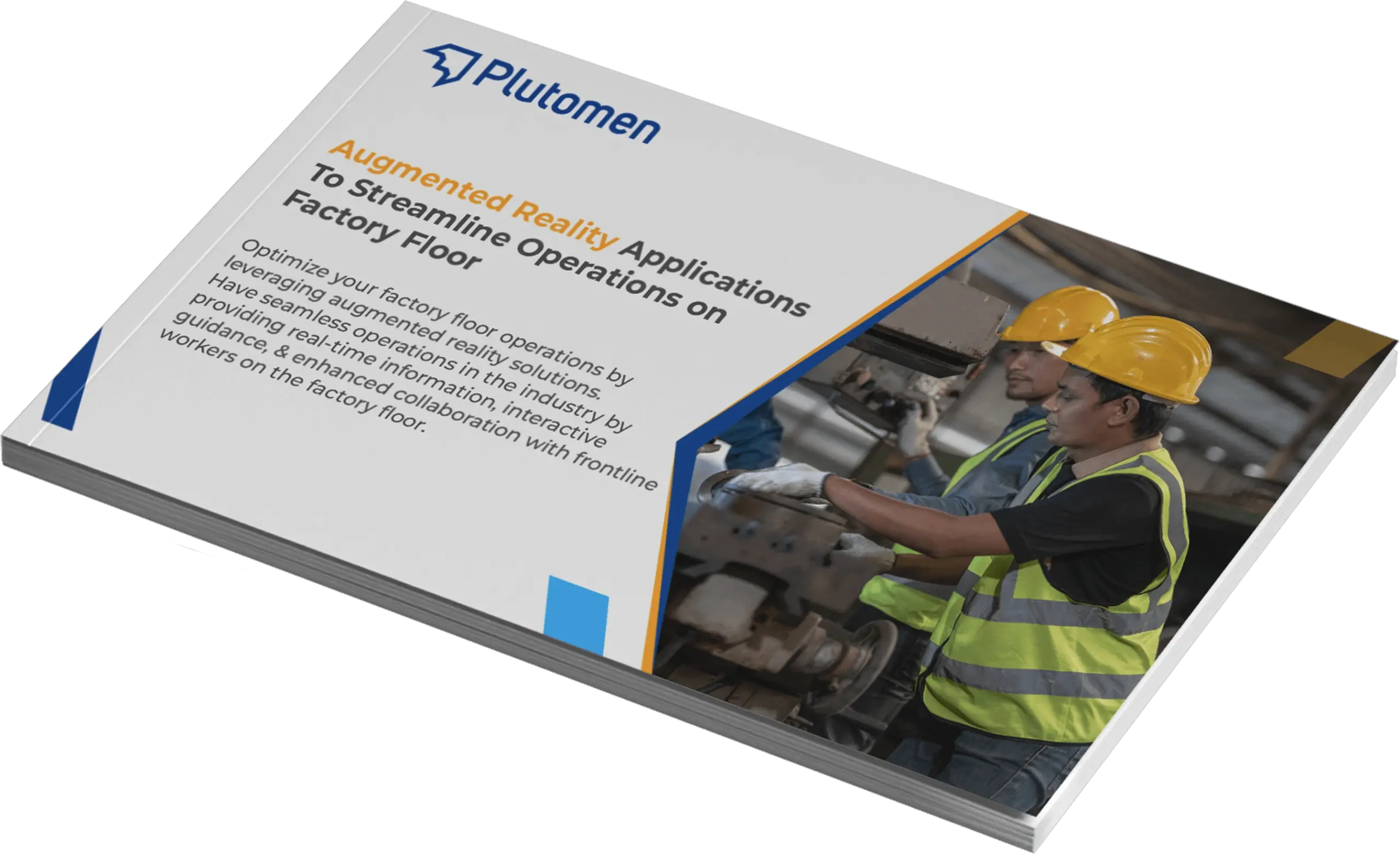
Download the eBook to learn about how augmented reality can be implemented on factory floor.
Download Ebook
With more than 12+ years of experience in the world of enterprises, technology, and metaverse, Keyur Bhalavat is leading Plutomen to gain meaningful partnerships & to have a strong clientele network. He is one of the board members of GESIA (Gujarat IT Association Ahmedabad).
Check out our latest blogs and news on all-things in Manufacturing.
Manufacturing companies continuously seek TPM implementation steps to increase their production and efficiency in today’s fast-paced business world. Equipment downtime and unforeseen maintenance are among manufacturers’ most significant problems. Unplanned maintenance can seriously disrupt operations, raising expenses, lowering output, and customer satisfaction. In the last three years, 82% of companies experienced at least one unplanned […]

Imagine a large manufacturing unit where a single machine breakdown halts the entire production line for a whole day. Think about the number of missed deadlines and the financial losses that would incur. It would be an awful scenario. And believe us, it is more common than you think. A survey by Up Time Institute […]
The slightest error can mean the difference between a positive client experience and lost business in field service management (FSM). The inability to handle field service requests on the first fix is one of the “mistakes” that negatively impacts customer satisfaction. Showing up is insufficient in today’s atmosphere of intense competition and changing customer expectations. […]