In industrial operations, mistakes are very expensive. Every rework, delay, or quality issue consumes time, labor, materials, and most importantly, energy that could have been avoided. This is why more manufacturing, maintenance, and operations leaders are focusing on one critical metric: First Time Right (FTR).
First Time Right is not merely about quality control; it’s about how reliably your frontline teams execute work, follow processes, and deliver outcomes without having to fix things later on.
In this guide, we’ll break down:
- What First Time Right really means
- How it’s measured
- Practical strategies to improve it
- How Plutomen’s connected worker platform enables sustainable FTR improvement
What First Time Right (FTR) Means
Right First Time (RFT) or First-Time Right, or FTR in manufacturing, measures the percentage of tasks, processes, or products executed correctly on the first attempt on the shop floor, eliminating the need for rework, corrections, or any intervention. It’s an essential part of Six Sigma and total quality management, which aims to make the workflow better for frontlines.
In simple terms:
First Time Right means completing work correctly the first time, without needing to fix mistakes later.
FTR applies across multiple industrial use cases, including:
- Manufacturing and production
- Maintenance and inspections
- Quality control
- Equipment installation and commissioning
- Field service operations
Whenever work has to be repeated, corrected, or revisited, it directly reduces the First Time Right score.
How is Right First Time Calculated?
The standard formula for calculating FTR is:
FTR (%) = (Number of Defect-Free Units / Total Number of Units Produced) × 100
For example, if a manufacturer produces 1,000 products in a month and 880 are completed without rework or defects, the FTR would be calculated as follows:
FTR = (880 ÷ 1,000) × 100 = 88%
In this case, the FTR is 88%, indicating that 88% of the products were produced correctly on the first attempt.
Tracking FTR over time helps organizations identify patterns, benchmark performance, and prioritize improvement initiatives.
Note: A low FTR score indicates inefficiencies requiring more attention. For example, an FTR of 60% means that 40% of output requires rework or correction, indicating substantial chances for process improvement.
However, if you don’t use your FTR score as part of a continuous plan, it won’t matter. Every day, manufacturers must take action to enhance their processes.
Continue reading to have a better understanding of the actions a manufacturer should take to enhance their production model from the very beginning.
How to Improve First Time Right Score
Improving First Time Right is not a one-time fix. It requires a structured, continuous approach that helps organizations understand where execution breaks down, why human errors occur, and how to prevent them from happening again.
The steps below provide a practical framework for improving FTR across manufacturing, maintenance, and field operations.
Step 1: Identify What’s Wrong with Your Production Process
The first step to improving First Time Right is understanding where failures occur.
Once you calculate your overall FTR, break it down further by:
- Process
- Task
- Equipment
- Shift or location
This assists you in identifying specific areas where rework, defects, or repeat tasks are most frequent.
For instance, you may discover that:
Certain maintenance tasks consistently require follow-up work
At this stage, the goal is not to fix the problem, yet it is to clearly define which parts of the operation are impacting FTR the most.
Step 2: Calculate the Impact of Rework and Errors
Once you are aware of the problem areas, the next step is to understand how costly they really are.
Low FTR affects more than quality metrics. It directly impacts:
- Labor hours spent on rework
- Equipment downtime
- Material scrap and waste
- Delays in production or service delivery
Quantifying this impact helps organizations prioritize improvement efforts.
Step 3: Determine the Root Causes Behind Execution Failures
To improve First Time Right (FTR), it is essential for organizations to understand why work is not being done correctly without any rework at first time. Common root causes include:
- Unclear or outdated work instructions
- Inconsistent execution across workers or sites
- Skill gaps or insufficient training
- Lack of access to expert guidance during execution
- Manual, paper-based processes that allow steps to be missed
In most cases, errors occur as workers lack the right info, support, or guidance at the right time.
Step 4: Improve Execution Process
After identifying root causes, the focus shifts to improving how work is performed.
This involves:
- Simplifying and standardizing task steps
- Breaking complex procedures into clear, sequential actions
- Introducing visual and interactive work instructions
- Reducing cognitive load for frontline workers
- Making the correct way to perform a task obvious and repeatable
Step 5: Embed Quality Checks Into the Workflow
Improving FTR requires shifting quality from inspection to execution.
Rather than relying only on end-of-process inspections, organizations should:
- Embed validation steps directly into tasks
- Require confirmations, measurements, or visual proof at critical points
- Ensure key steps cannot be skipped
- Standardize quality expectations across teams
By building quality checks into the workflow, errors are caught early, before they turn into costly rework or defects.
First Time Right and Other Quality Metrics
Organizations often track First Time Right alongside other operational metrics to measure performance accurately.
First Pass Yield
First Pass Yield measures the percentage of products that pass production stages without defects.
Cost of Poor Quality
This metric calculates financial losses caused by defects, rework, and operational inefficiencies.
Mean Time to Repair
Maintenance teams track how quickly technicians restore equipment after failures.
Together, these metrics provide valuable insight into operational efficiency and production quality.
Why a Connected Worker Platform Is Key to These Steps
Improving First Time Right depends on how effectively frontline work is planned, executed, and monitored. The biggest gains come from addressing execution gaps early before they turn into rework, defects, or unplanned downtime.
Organizations looking to improve first time right should focus on the following:
- Standardize work by creating and sharing clear, digital SOPs at the point of work
- Guide workers through complex tasks using step-by-step checklists and embedded quality checks
- Support frontline teams with continuous, task-based training and on-demand assistance
- Monitor frontline task execution in real time to quickly identify deviations and repeat issues
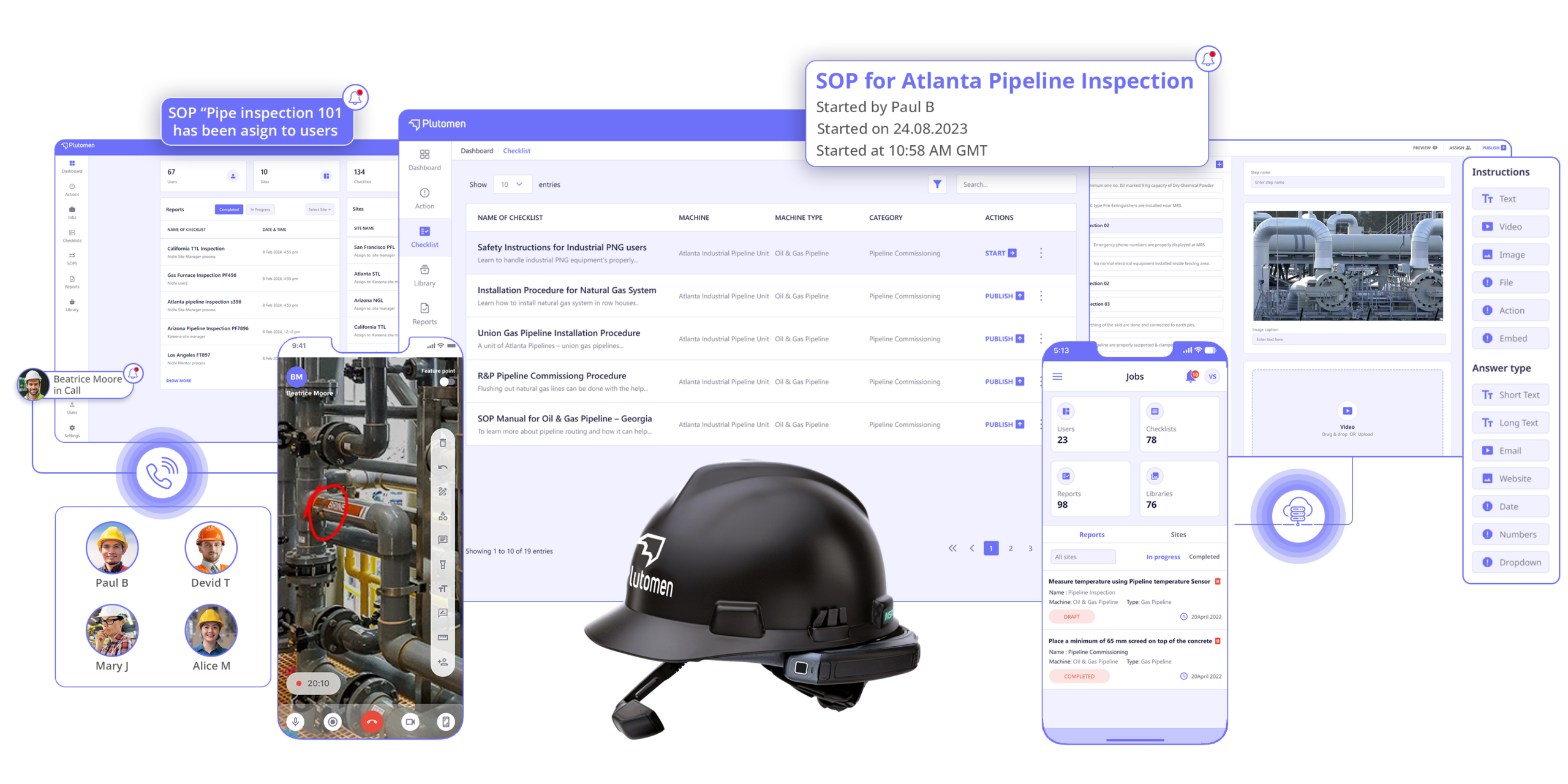
Plutomen’s Connected Worker Platform helps organizations to increase First Time Right score by digitizing frontline workflows, standardizing execution, and enabling real-time visibility into how work is actually performed. By equipping workers with guided instructions, quality checks, and remote support, teams can reduce rework, improve compliance, and consistently get work done right the first time.
Conclusion
First Time Right measures how often organizations complete tasks correctly during the first attempt. This metric provides valuable insight into operational efficiency and workforce performance.
Companies that improve FTR performance reduce rework, control operational costs, and increase productivity. Consistent task execution also improves product quality and customer satisfaction.
Clear procedures, workforce training, and digital workflow systems help teams perform tasks accurately. Organizations that focus on First Time Right can achieve stronger operational stability and long-term business success.
Improve First Time Right Across Your Frontline Operations
See how Plutomen’s Connected Worker Platform helps teams standardize work, reduce rework, and consistently get tasks right the first time.
Book a DemoFrequently Asked Questions

Keyur B
CEO, Founder of PlutomenWith more than 12+ years of experience in the world of enterprises, technology, and metaverse, Keyur Bhalavat is leading Plutomen to gain meaningful partnerships & to have a strong clientele network. He is one of the board members of GESIA (Gujarat IT Association Ahmedabad).