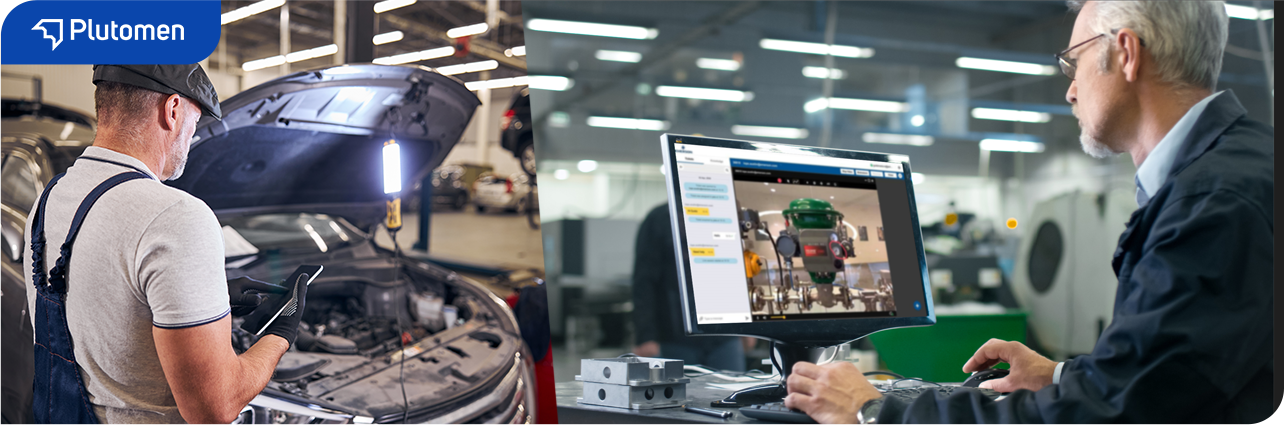
Imagine a training program where you could acquire new skills without making any mistakes in the real world. Where you could interact with virtual objects and scenarios to get an immersive experience. Where you could learn at your own pace and in the way that works best for you.
This is where augmented reality in training comes in role!
Augmented reality (AR) is a technology that overlays digital elements into the real world. AR in training can be used to create interactive training experiences that are more engaging and efficient than traditional methods.
In fact, as per the study, AR training solutions can reduce onboarding time by 40-60% and improve worker’s productivity by 90%.
With these benefits, it is no wonder that Augmented reality training plays a pivotal role in almost every industry today. In this article, we will explore its benefits in more detail and how training with AR can be helpful in different enterprise environments. But before that let’s first see how it works. So, without any further ado, let’s begin!
How Does Augmented Reality Training Works?
As discussed earlier, augmented reality (AR) training works by imposing interactive, digital elements and information onto the real world. This can be added using various devices like smartphones, tablets, laptops, or headsets. This allows the frontline workforce to interact with elements and experience everything as if they were actually present in front of them. For example, a trainee can use AR to practice installing equipment or carrying out any maintenance operations.
Not only that, but AR can also collect real-time data and do analysis which can track progress and identify areas of improvement so that you can adjust training programs as per your needs.
In comparison to old traditional training techniques, AR training has a lot of benefits. For instance, augmented reality in training can be more immersive and engaging, which can improve workers’ productivity. Additionally, AR training may be utilized to simulate hazardous or challenging situations that would be too costly or impossible to practice in the real world.
Benefits of AR Augmented Reality in Training
Augmented reality in training provides significant benefits in terms of safety, efficiency, and productivity. Let’s see some more benefits of Augmented Reality for training:
Cost Saving
The very first benefit of employing AR in training is the cost. With the use of AR, service teams and training teams can reduce a lot of travel costs. As they are providing training from a remote location, there is no need to travel to the training center. As per a European telecommunications service provider, KPN, service teams witnessed an 11% reduction in overall costs while providing field service.
Real-time Guidance
No matter where the trainers or trainees are, with AR, you can provide real-time guidance to your trainees anywhere and receive real-time feedback regarding the same. The real-time and live video guidance eliminates the chance of any error or confusion.
Interactive and Immersive Learning
AR tools allow the trainers to provide interactive and immersive learning experiences. As trainees can learn about the machinery by actually working on it, it helps them understand better. Unlike just watching videos and reading, AR in training can make sessions worthwhile.
Remote Collaboration
Augmented Reality can help technicians collaborate remotely with experts. You won’t have to travel anywhere physically to collaborate with your colleagues.
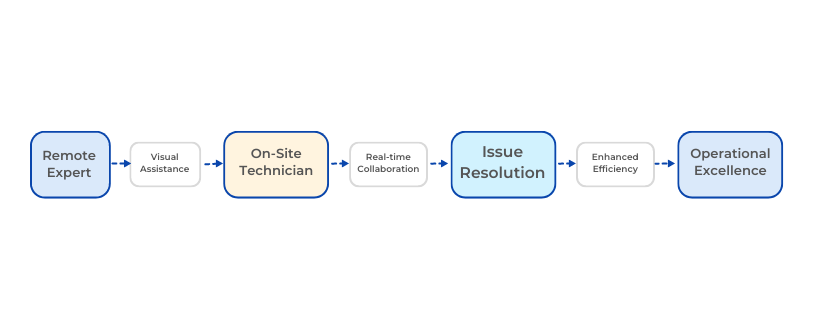
The above diagram shows how AR remote assistance allows real-time collaboration between remote experts and on-site workers, resulting in effective problem-solving and operational excellence. Technicians are able to solve their issues faster with remote assistance, ultimately running their operations smoothly and effectively.
Reduced Downtime
When AR is used in training and other industrial processes, the decrease in machine downtime is significant. As every repair and maintenance action on the machine is done prior to careful analysis, the possibility of downtime is almost negligible. As per stats, AR remote assistance can reduce machine downtime by 30-70%.
Improved Safety
Several sectors involve high-risk training situations. In that scenario, AR provides a safe environment for new workers to practice in a secure place without facing any issues. This is particularly useful in industries like manufacturing, aviation, telecom & healthcare.
Use Cases of Augmented Reality in Training
In the last few years, AR technology has advanced beyond gaming and industrial enterprises have recognized its potential for various uses. Let’s take a look at some of the AR training examples across various industries:
Industrial Training
Industrial training is the aspect where AR training in the manufacturing industry is most commonly used. For example, in industries like telecom, automotive, aviation, and more, numerous complex machines may need assembly, repair, or maintenance.
Dealing with these machines with thousands of parts working together can be tricky. Take the example of a plane. If any parts are not maintained or handled properly, the results can be catastrophic.
In such a scenario, training someone on these machines can be a whole new job altogether. Therefore, AR remote assistance can help. Those who are experts on machines like planes can assist new trainees in their effective assembly, maintenance, or repair. Real-time guidance and step-by-step instructions can reduce the steepness of the learning curve.
Medical Training
Medical training is critical as you are expected to operate on a living being. Hence, exceptional care is necessary. This can benefit patients and improve the effectiveness of healthcare facilities. With detailed visuals of the human body and interactive instructions for various medical diseases, augmented reality in medical field empowers medical personnel, such as physicians, diagnosticians, and nurses.
Even an article by Forbes says that augmented reality in medical training can be used by surgeons. Though it seems like a near-impossible task, it has been made possible at Sant’Orsola Hospital in Bologna.
So, if AR can be used to perform surgeries, it is pretty obvious that it can be used to provide training too. Numerous examples of AR in the medical sector can surely be used for training.
LaFlorida, a clinical lab in Florida, uses AR remote assistance to fix and maintain its medical equipment. The key point here is that the company saved around $500,000 on maintenance activities in 2022.
The remarkable aspect of AR-powered medical training is its ability to scale up training for a large number of healthcare professionals, ultimately improving the quality of care and saving more lives. As the healthcare industry becomes increasingly digitized and equipped with advanced monitoring devices, AR-based medical training is a natural progression, completing the transformation.
Telecom Industry Training
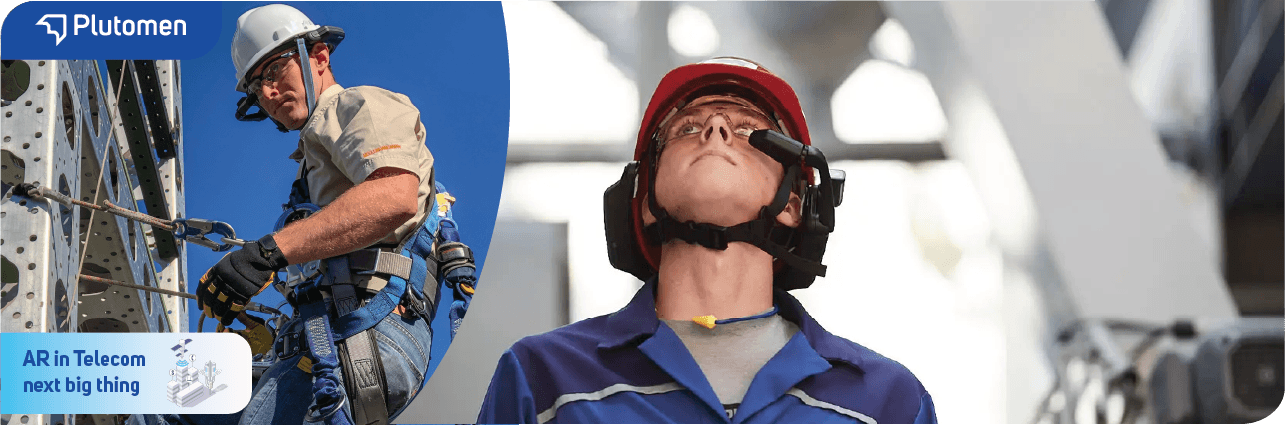
The telecom industry uses AR remote assistance to assist engineers in the field for repairs and telecom tower inspections.
Energy & Utility Sector Training
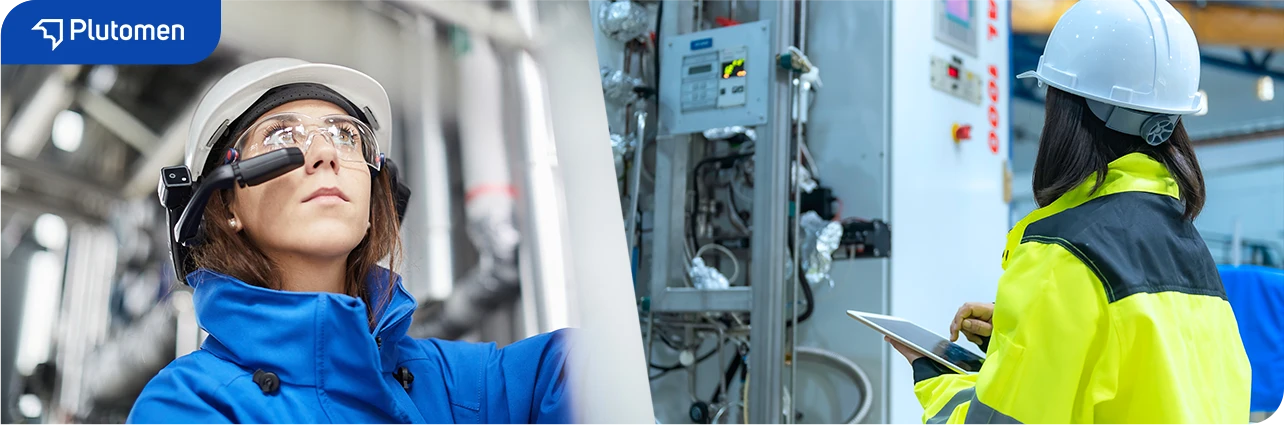
The energy & utility sector uses augmented reality for training to assist field technicians with equipment maintenance and repairs on-site. With the help of remote experts, technicians can solve complex issues in real time, ensuring their safety and proper machinery handling.
Military and Defence Training
The military & defense industry has implemented AR for training to improve combat training, operation planning, and vehicle maintenance. Augmented reality offers critical information and real-time guidance to soldiers during field operations.
Aerospace Training
Augmented reality in aerospace training allows technicians to see an overlay of parts on real models and provides them easy access to step-by-step instructions on repair & maintenance. Moreover, AR can help prepare trainees for real situations and handle emergency situations.
Other than these industrial examples, here are some AR business applications!
Connects Field Technicians to Experts
Industries like Telecom use AR for field service staff to connect field technicians with remote experts. On-site technicians seek assistance from remote experts regarding the repair and maintenance of the device. Further, cable service providers can assist customers in resolving issues on AR video conferencing chat.
Tech Support for Equipment Support and Repair
As mentioned above, cable operators and internet service providers use AR to assist in remote support and repair. Customers can share the view of their equipment with the remote support assistant. Further, the assistant can help the customer take necessary actions by providing visual cues, annotations, and digital instructions.
Providing Training from Remote Locations
With augmented reality, professional trainers can train multiple participants in the same video sessions using interactive and immersive 3D models related to different projects. This is possible if the expert trainer is at a remote location.
Further, with AR, trainees can use their smart devices to scan a QR code on the machines and get on-screen operating instructions for the machines.
Is Augmented Reality Fit for Training?
Yes, absolutely! AR is a perfect fit for training. However, when we talk about training, it is not just mugging up some random pre-created steps or procedures. Training should actually teach the person how things happen, and that can only be done by practically doing it.
Though getting hands-on with real machines can be challenging, AR makes it much easier. So, let’s discover how AR for training enhances engagement and efficiency.
Immersive Learning: With augmented reality by your side, you can operate the machine based on the on-screen cues and annotations provided by the expert. Hence, making you learn by doing than just watching videos.
Boosts Engagement: AR training is a great way to boost engagement while learning. As AR allows you to learn while you actually operate the machine, trainees can be more focused and attentive. Therefore, boosting their engagement.
Better Safety: Training should be focused on more than perfecting the skills. It should also be safe. Augmented reality training ensures perfect security as the trainees can take every step by viewing it on the screen as directed by the expert, eliminating the chance of any injury.
All these Augmented reality aspects make it ideal for training.
Case Study of Augmented Reality in Training
Augmented Reality (AR) has been increasingly used in training across various fields. Here are some success stories of AR in training:
Porsche
An excellent case study of augmented reality in automotive training related to AR remote assistance is Porsche’s” Tech Live Look.”
The AiR Enterprise software backs the smart glasses, Tech Live Look. With the help of smart glasses and software, technicians at a dealership in LA can get remote assistance from experts in Atlanta via videoconferencing. Experts can train them to identify and resolve technical issues and help cut resolution time by 40%.
Boeing
Boeing is the producer of some of the most complex machines on the planet, and to ensure that these machines perform as intended, it uses AR. Boeing employs AR in its training program to help employees conduct complex repair procedures and object identification easily.
Verizon
Verizon is another great example of using AR remote assistance in training. Verizon uses AR for maintenance and repair. This helps the firm enhance its training process, save costs, and improve productivity.
Augmented Reality Training with Plutomen
Plutomen is an AR-powered frontline operational platform that empowers your frontline workforce with remote assistance, work instructions, and immersive training. By using our solutions, organizations can streamline their training process.
Plutomen Connect: Plutomen Connect is a cutting-edge AR solution that allows remote technicians to seek professional help from remote experts via video conferencing. This video session is backed by visual cues, annotations, 3D object detection, text chat, take screenshots, and many more that help them quickly identify and resolve the issue. Plutomen Connect can be useful in remote assistance training as experts can use the same visual features to train the employees on various machines and their work.
Plutomen Workflow: Plutomen workflow is a digital work instructions software that offers real-time instructions and guidance during training. For example, digital work instructions could be used in training assembly line workers, guiding them through step-by-step instructions as they work. Our solution can be seamlessly integrated with smartphones, tablets, smart glasses, or laptops.
Plutomen Assist: Plutomen Assist is the most immersive AR Training software, which enables industry experts to develop their own training model. This makes it easier for new workers to understand complex concepts. By providing interactive 3D models, you can train front-line workers without actual machines, enhancing the learning experience.
AR in Training Prepares your Frontline Workforce for New Roles in Less Time!
Discover how AR can engage your workers, enhance retention, and boost overall training effectiveness with Plutomen.
Request DemoFrequently Asked Questions

Hiren Kanani
CTO, Cofounder of PlutomenWith 10+ years of experience, Hiren Kanani has helped Plutomen ensure smooth communication between the company and its clients for swift project delivery with fewer iterations. He is the CTO and founder of Plutomen.