Remote strategies for customer support are becoming increasingly common in today’s business world. Companies are using technology such as Augmented Reality (AR), live video streaming, and artificial intelligence to provide support remotely, which can save both time and money while still providing a memorable experience for customers. However, there are still questions and challenges that arise with remote support.
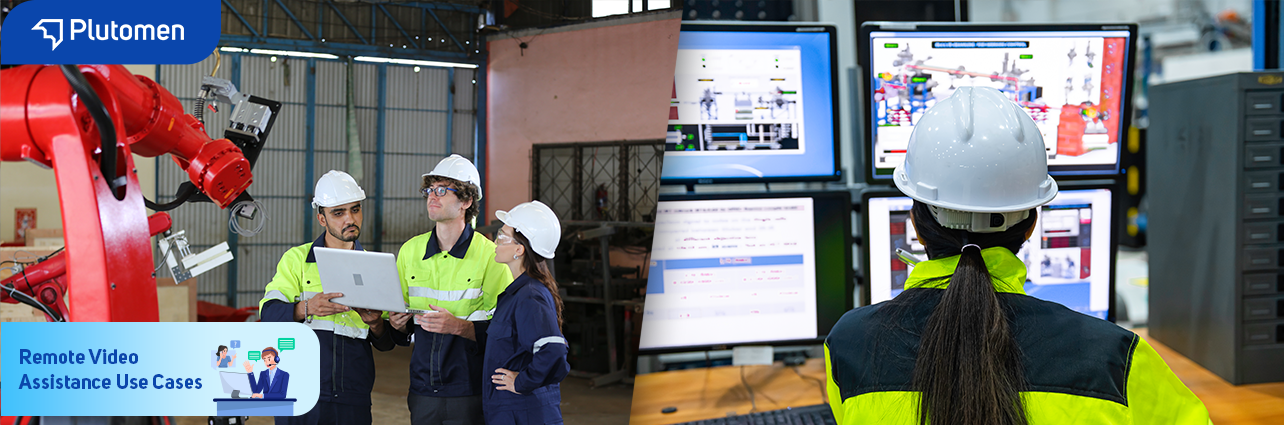
Remote visual support is a service that allows businesses to provide technical support and assistance to customers remotely, using tools such as troubleshooting problems, providing guidance, and answering questions without the need for the customer to be physically present.
One of the main benefits of remote visual support is that it can save time and money for both the business and the customer. Instead of requiring the customer to travel to a service center or wait for a technician to come to their location, the issue can be addressed remotely, saving both parties time and resources. Remote visual support can also be more convenient for the customer, as they can receive assistance from the comfort of their own home or office. This can be especially beneficial for customers with disabilities or mobility issues, as they may have difficulty accessing a service center in person.
In addition, remote visual support can help businesses expand their reach and provide support to a wider audience. With the ability to connect with customers remotely, businesses can provide support to customers in different locations and time zones. Overall, remote visual support is a valuable service that can help businesses improve the customer experience, while also saving time and resources.
What is Remote Visual Support?
Remote Visual Support involves the use of various tools and technologies that allow customer experience agents to offer technical support remotely. This can include remote access to a customer’s computer, as well as video call-based problem diagnosis. The popularity of remote support has been on the rise for some time, but the COVID-19 pandemic and the continued trend of remote work have further fueled its adoption.
The problems with remote work for small businesses to established industries
There are several difficulties in working remotely, including:
- Keeping organized is challenging.
- It makes the hiring and training of workforce more difficult.
- Working remotely might make it more challenging to manage both new and existing customers.
- Communications are more difficult when you’re not at work.
One of the reasons why some companies utilize qualitative customer service to gauge the effectiveness of their customer service is that small firms, in particular, need to offer high-quality customer care. It goes without saying that any company with subpar customer service reduces its chances of growing its clientele. Happy customers result in recommendations, which increase sales.
How AR improves Remote Visual Support?
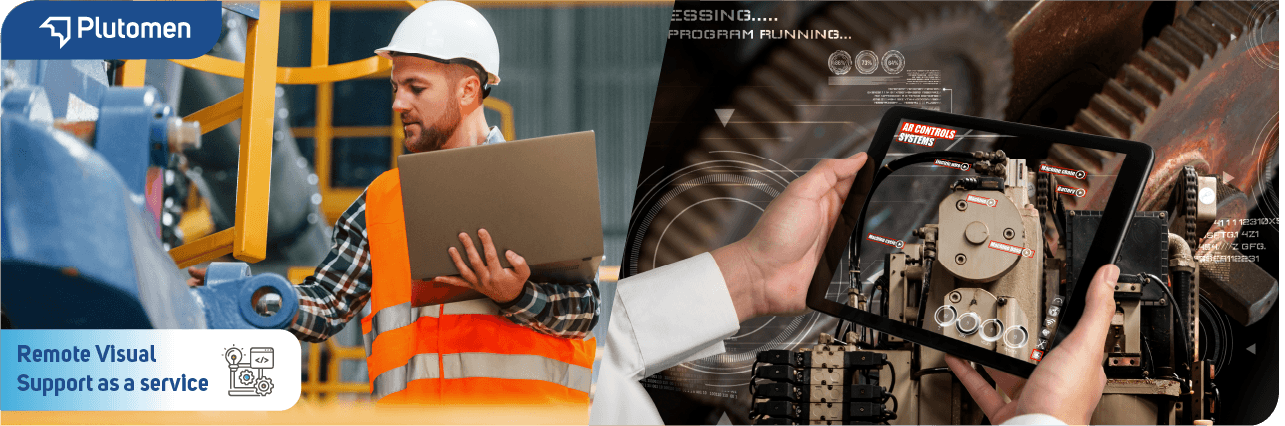
One of the most notable aspects of remote visual support technology is augmented reality. AR combines reality with live video streaming by allowing users to overlay their surroundings and objects using smartphones and other mobile devices. AR acts as a visual guide on the customer’s smartphone with a support agent guiding them through every step of the way to the best, most relevant solution through real-time broadcasting of the customer’s surroundings all the way to the support team’s office. The remote expert can simply demonstrate to the client what to do in order to resolve the problem, as opposed to carefully outlining every step that needs to be taken.
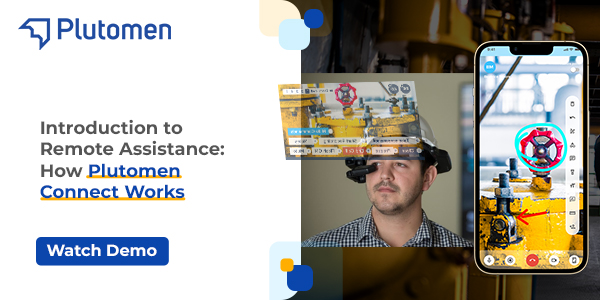
Augmented Reality Support can be utilized in a variety of areas of your company because of its effectiveness and adaptability. AR can enhance the remote customer support experience at every level of technical support, from unboxing and installing to remote troubleshooting, by enabling a more acute issue diagnosis and real-time resolution. According to Deloitte, AR-enabled training and support improve knowledge retention by up to 75%, making it ideal for remote customer support and frontline operations.
One of the primary elements of AR is the storage and organization of essential real-time data. AR also has a significant impact on service operations. Sharing physical papers with the rest of the team, underlining crucial contract clauses, clarifying specifics on billing questions, adding pertinent data in several places, confirming and allowing returns… Virtually everything is possible with augmented reality. Additionally, it can be an excellent tool for the company’s field services, such as navigating and streamlining procedures, getting in touch with distant professionals, and locating the problem.
Even though the process is remote, augmented reality virtual help enables a more interactive and collaborative problem-solving approach from start to finish. The customer can readily identify the ongoing problem and follow the specific directions offered by the remote expert because both they and the support staff are looking at the problem from the same distinct perspective. By doing this, the remote customer support staff not only ensures that the suggested solution is of the highest caliber and competence, but also develops a more intimate and engaging relationship with the client.
Considerations when Selecting Remote Visual Support as a Service
Since remote visual support technology is a popular developing technology, the number of products on the market is expanding quickly. It is important to identify the most prevalent issues your support team deals with, the potential contribution to your company’s KPIs, and which approach to problem-solving will help achieve the ideal agent usage rate before evaluating which solution will match the needs and expectations of your business best. These are the top 5 things to think about when choosing a remote visual support solution.
1. Client-channel architecture
Depending on the client channels they are intended for, different remote visual support systems resolve issues in different ways. Do contact centers, remote desktop help, or co-browsing make up the majority of your business’s customer service? The user experience and straightforward interactions between the customer and the agent are frequently the emphasis of contact center solutions, which also aim to decrease average handle time, enhance first call resolution, and precisely track agent performance.
2. Way of delivering a solution
Would you want an app or a browser to give the solution? Solutions that ask users to download an app typically weigh things down and can be annoying. On the other side, web apps don’t need to be downloaded and offer a more streamlined user experience regardless of the server or device being used.
3. Size of a customer service desk
Which kind of remote support solution you require depends significantly on the size of your company and its remote customer support requirements. Do you need a platform for cross-organizational remote troubleshooting or just a small support desk? Larger businesses need technologies that facilitate easier data transfer, communication, and multilateral channel connections.
4. Software or hardware
Do you offer customer service support for both physical products and any accompanying software? If the answer is yes, you must pick a system that has more sophisticated support tools and user-friendly remote features, such as co-browsing, live video streaming, and desktop to mobile mirroring.
5. Automation
As time goes by, remote visual assistance becomes increasingly automatic. No matter how technologically sophisticated you want your customer support services to be, there are options available. By employing recorded data to automate future computer processes across numerous contact centers, service operations, and support field services, remote visual assistance and augmented reality can enable your firm to undergo a full digital transformation. Additionally, this makes it simpler for the customer care team to apply a next issue avoidance technique, which entails anticipating potential future issues and taking appropriate action while treating the current problem.
An engaging, user-focused, time-efficient technology as a service called Remote Visual Support can elevate the level of customer care offered by your company, boosting client satisfaction, empowering support employees, and fostering a culture of excellent customer service. The concept of traditional customer support is expanded upon by remote assistance. The correct solution, tailored directly to your firm, will produce commercial benefits beyond just resolving customer issues.
Plutomen’s Approach
Plutomen Connect is a remote visual support in a form of service that helps technicians resolve critical issues in real-time. It connects technicians in an augmented reality environment where they can communicate and see each other through an AR-powered camera stream. This stream allows technicians to guide each other using hand-drawing, marking, or writing texts in the form of AR annotations. By using Plutomen Connect, technicians can achieve a quicker turnaround time and first-time resolution of issues.
Frequently Asked Questions

Keyur B
CEO, Founder of PlutomenWith more than 12+ years of experience in the world of enterprises, technology, and metaverse, Keyur Bhalavat is leading Plutomen to gain meaningful partnerships & to have a strong clientele network. He is one of the board members of GESIA (Gujarat IT Association Ahmedabad).