
Keyur B
September 16, 2024
10 minutes to read
Updated On : November 5, 2025

“It is almost as difficult to make a man unlearn his errors as his knowledge.” — Charles Caleb Colton
Human error continues to challenge the manufacturing industry, even with modern machines and structured processes. Issues such as inventory issues, aging equipment, and workforce shortages can be solved. BUT, mistakes made by humans are far harder to prevent.
The scale of the problem is clear. Studies show that 80% of manufacturing defects come from human mistakes. 23% percent of unplanned downtime is caused by errors on the shop floor. This does not stop here, research from the National Institute of Standards and Technology (NIST) estimates that human errors can lead to scrap and rework costing 5 to 30% of total manufacturing expenses.
These errors do more than slow production. They reduce efficiency, increase costs, and affect the reputation of the business.
But before we dive deep into why these human errors occur and how to prevent them, let’s have a look at the different types of human errors that keep occurring in manufacturing.
Before discussing the types of human errors, let’s start with a basic definition:
In manufacturing, human error occurs when a worker makes a mistake that results in a defective product or one that fails to meet the required standards.
Human error is not limited to a single scenario where a worker mishandles a machine or miscounts a product. Several types of human errors can occur in different contexts. Here are some common types:

Assembling complex products can be challenging. Although modern technologies like Artificial Intelligence (AI) and Robotic Process Automation (RPA) have made assembly processes easier, some industries still rely on human workers for various assembly tasks. For example, the woodworking industry often requires manual assembly.
While experienced workers can perform these tasks efficiently, new workers are more prone to mistakes. Using clear work instructions, machine manuals, and AR-based instructions with detailed sketches and 3D holographic images can help reduce errors.
Many manufacturers rely on human workers to label their products. Among different product categories, food products are particularly vulnerable to problems caused by incorrect labeling. Labels often include essential information such as expiration dates, ingredients, and manufacturing dates.
If any of these details are incorrect, it can lead to fines, legal issues, product recalls, and damage to the brand’s reputation. For instance, Nestlé had to recall Maggi Instant Noodles due to incorrectly declared gluten or peanuts.
Errors in measuring or counting products can cause significant issues. For example, when products are counted manually, there is a high risk of human error, especially with large volumes. Additionally, if a mistake is made in measuring a sample product for a batch, the entire batch can be affected.
Proper setup is crucial for any successful manufacturing process. Whether setting up an assembly line or installing a new machine, it is essential to thoroughly understand the setup and installation process.
If additional time or expertise is required for installation, calibration, or troubleshooting, it is better to invest in these resources upfront rather than produce defective products. Manufacturers can also produce a few sample products to ensure the machine is correctly set up.
Humans make mistakes because of their work environment, processes, and demands, not because they don’t care. Let’s look at what really causes them on the factory floor.

The manufacturing sector faces the highest employee turnover rate, meaning that new hires often begin work without receiving on-the-job training.
97% of manufacturers are concerned about losing critical operational expertise when the skilled workforce leaves. Numbers are really shocking.
If workers do not receive proper training or do not have access to hands-on learning experiences, then there is a chance of errors. Using AR-based digital instructions and AR visualization software can make training more engaging and effective.
2. Limited Communication Between Teams
Manufacturing operations rely greatly on proper communication. When information does not move properly across departments or shifts, critical updates are lost.
A maintenance issue that goes undetected, or a change in process that is not properly conveyed, is likely to create production interruptions.
Even a small gap in an organization can result in equipment damage, production delays, or safety hazards.
3. Inadequate or Outdated Work Instructions
Not very surprising, but unclear or outdated work instructions cause human error. Imagine when operators have to understand handwritten notes or just rely on word-of-mouth advice. This definitely causes mistakes and results in costly ones.
Inconsistent documentation, missing images, or confusing instructions make it difficult for workers to understand what is required, especially when production changes occur often.
4. Stress
Stress could pose a greater risk for human errors, impacting performance and accuracy.
Whether it is long working hours or tight deadlines, it all leads to a loss of focus. According to research, stress, repetition, and exhaustion cause roughly half of all human mistakes in industrial settings.
When workers are emotionally or physically exhausted, even basic work might be sloppy.
5. Poorly Maintained Equipment
You need to understand that machines that are not regularly maintained or repaired are likely to produce risky and inconsistent working conditions.
Operators frequently attempt to adapt or compensate for malfunctioning tools, which increases the chances of errors.
Small technical faults that are neglected for too long can lead to major breakdowns or quality variations in the near future.
6. Lack of Standardization Across Shifts
When each shift or team follows a somewhat different procedure, mistakes are nearly unavoidable.
What one operator considers the “right” manner may differ from another’s method.
This mismatch causes variances in product quality and misunderstandings during handovers, particularly in large-scale production facilities.
7. Poor Decision-Making
Manufacturing decision-making is becoming more crucial during a time of mounting pressure in the industry. And the reason behind poor decisions is often lack of experience or improper training.
It is suggested to use advanced technologies like Augmented Reality solutions for better training and real-time communication.
8. Information Overload
Too much information or too little information, both are harmful. Operators who usually manage several dashboards, checklists, and alerts sometimes struggle to find what is most critical. This cognitive stress impairs attention, lowers response time, and raises the probability of overlooking, particularly during complicated tasks.
After analyzing the reasons for human error, it’s clear that the cost of human error in manufacturing, or any other process, goes beyond financial losses. Several other factors can be classified as costs. Here are some of them:
Loss of man hours is directly related to downtime. When a human error occurs, machinery may malfunction or stop working, leading to wasted man hours.
According to statistics, unplanned downtime can cost a manufacturer around 800 hours per year, which can translate to millions of dollars. Furthermore, Fortune 500 companies lose about 3.3 million hours of labor each year due to unplanned downtime. While this may not directly represent the cost of human error, it certainly forms a significant part of these concerning figures.
When machines are not operational, both man hours and overall productivity suffer. A single worker’s mistake in the production pipeline can disrupt the entire production line, causing widespread productivity issues.
Human error leads to downtime, which, in turn, results in wasted time. Statistics show that 90% of workplace accidents are due to human error, leading to substantial losses in both money and time.
Ultimately, the impact of human error is most evident in a company’s revenue. As human errors increase, revenue losses also rise.
An illustrative example of human error in manufacturing is the 2014 product recall by General Motors. The company’s engineer, DeGiorgio, was involved in designing a faulty ignition switch that could shut off the engine while the car was in motion. This defect resulted in 97 deaths and led the company to recall 2.6 million small cars.
It’s well-known that improper training can lead to human error. In fact, statistics show that 10% of human errors are caused by inadequate training. Therefore, proper and timely training of workers is essential. Here’s why:
In some processes, human errors are inevitable, such as in assembly or labeling, especially when production is on a large scale. With adequate training, workers can become familiar with machines and their potential pitfalls, allowing them to be proactively cautious about avoiding errors.
Technologies like Augmented Reality (AR) and connected worker platforms provide a more immersive and comprehensive training experience. These technologies enable workers to maintain uninterrupted oversight of machinery and processes, helping to prevent human errors. A connected worker platform typically includes built-in instructions, communication channels, machine data, and other innovative features.
AR-based training tools and digital work instructions are transformative resources that help workers understand how machines operate and their internal components. This enhanced understanding leads to better control over machines, thereby reducing human errors.
Not sure where to begin?
Don’t worry, you’re not alone.
Mistakes on the shop floor don’t happen coz workers don’t care. They occur when they face unclear work instructions, inconsistent procedures, or miscommunication.
To help you out, we’re sharing some effective tips to reduce human errors and improve overall operations.
Workers must be fully aware of how to complete every task. Unclear or outdated instructions increase the chances of errors.
SOPs and digital work instructions are an excellent choice to start, as they provide the workforce with precise, detailed instructions whenever needed. Complex tasks can be made simple and completed easily with the help of visual work instructions.
2. Encourage Open Communication
Believe it or not, most of the errors arise frequently because minor concerns are always neglected. So, in this situation, it becomes essential for teams to communicate openly and ask questions whenever needed. Platforms that allow for real-time collaboration reduce downtime and keep the operations running smoothly.
3. Invest in Worker Training
When transitioning to new and advanced machinery, conduct special training sessions for workers. Some workers accustomed to older equipment may not be familiar with new machines and their operations, increasing the likelihood of errors.
Digital training modules, AR-based simulations, and interactive SOPs can make learning engaging while providing guidance exactly when employees need it.
4. Maintain Equipment Regularly
In many situations, even skilled operators might make mistakes if the machinery is faulty.
Preventive maintenance schedules and frequent inspections ensure that equipment runs smoothly at all times. Maintaining optimal equipment conditions eliminates operating mistakes, enhances product quality, and avoids accidents.
5. Standardize Processes Across Teams
Inconsistent methods lead to confusion and errors. Using standardized processes, checklists, and digital SOPs ensures that each team and shift follows the same procedures. Standardization also streamlines training, allowing new workers to learn operations faster while eliminating errors.
6. Create Role-Based Access and Permissions
Giving each worker access to every function raises the likelihood of unintentional modifications or wrong actions.
Restricting equipment, software, or workflow access based on role makes sure that employees can only undertake activities for which they are trained and authorized, reducing unintended mistakes.
Human errors will always occur, but their effect may be considerably reduced when organizations provide frontline personnel with adequate instruction, information access, and the latest technologies. The transition from paper-based to digital, standardized, and interconnected workflows is now very much important for operational dependability, safety, and efficiency.
Plutomen’s connected worker platform is designed to enable this transition by offering digital work instructions, real-time remote assistance, and immersive training experiences that reduce dependency on tribal knowledge and manual processes. With structured workflows, step-by-step guidance, and instant expert support, enterprises can build a workforce that performs with consistency, accuracy, and confidence — regardless of experience level.
Organizations that are ready to modernize frontline operations and significantly reduce human error can leverage Plutomen to achieve measurable improvements in productivity, quality, and compliance.
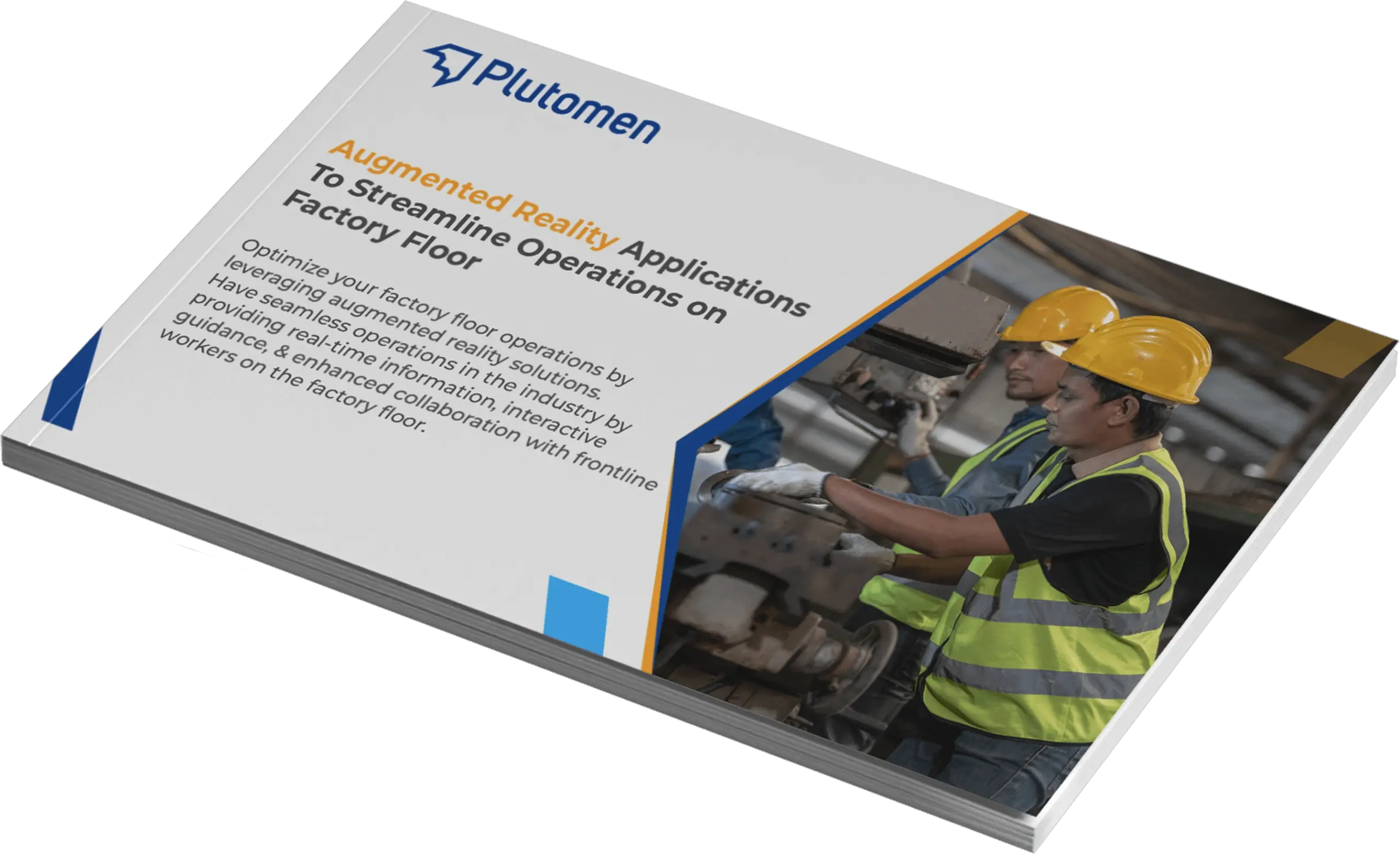
Download the eBook to learn about how augmented reality can be implemented on factory floor.
Download Ebook
With more than 12+ years of experience in the world of enterprises, technology, and metaverse, Keyur Bhalavat is leading Plutomen to gain meaningful partnerships & to have a strong clientele network. He is one of the board members of GESIA (Gujarat IT Association Ahmedabad).
Check out our latest blogs and news on all-things in Manufacturing.

In 2021, 408 million tons of paper was used. This is a massive amount of paper considering that to complete the paper demand of the US, 1 billion trees had to lose their life. Don’t you think it’s time to go paperless in everything you do today? When everyone from an individual to an industry […]

The majority of factories around the world are still utilizing industrial Ethernet and old wireless technology based on Wi-Fi, which has constrained capabilities, and smart production depends on dependable high-speed communication. Industry 4.0 producers, or “smart factories,” will be significantly impacted by 5G in terms of how they manufacture and distribute things. The Internet of […]

In industrial operations, mistakes are very expensive. Every rework, delay, or quality issue consumes time, labor, materials, and most importantly, energy that could have been avoided. This is why more manufacturing, maintenance, and operations leaders are focusing on one critical metric: First Time Right (FTR). First Time Right is not merely about quality control; it’s about how reliably your frontline teams […]