
Hiren Kanani
July 4, 2023
7 minutes to read
Updated On : September 25, 2023

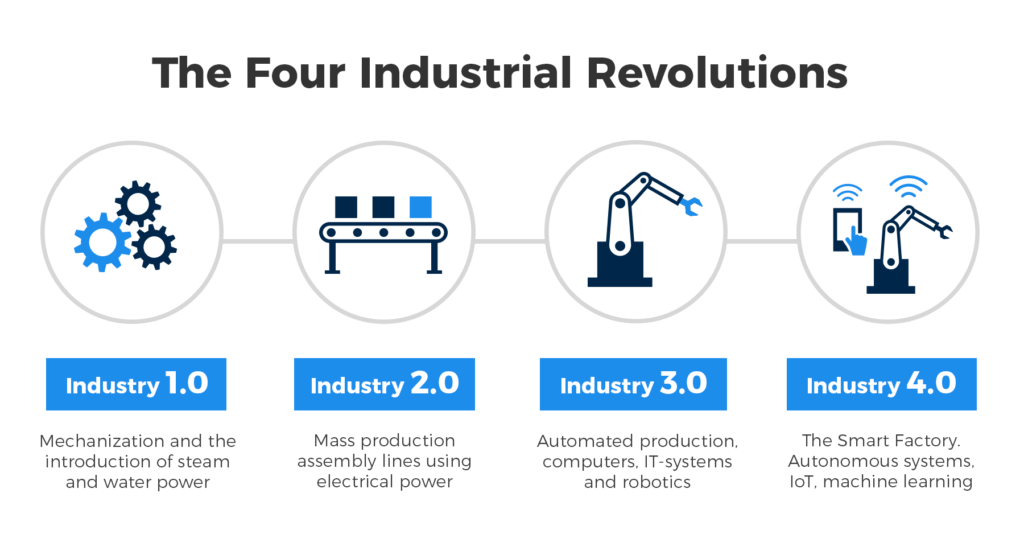
Industry 4.0 indicates the transformation and the rise of new industrial digital technology, which makes gathering and analyzing the data across various machines possible, resulting in faster, flexible, and more efficient processes. This revolution has increased productivity and fostered industrial growth that changes the competitiveness of companies and regions.
Source : elinext
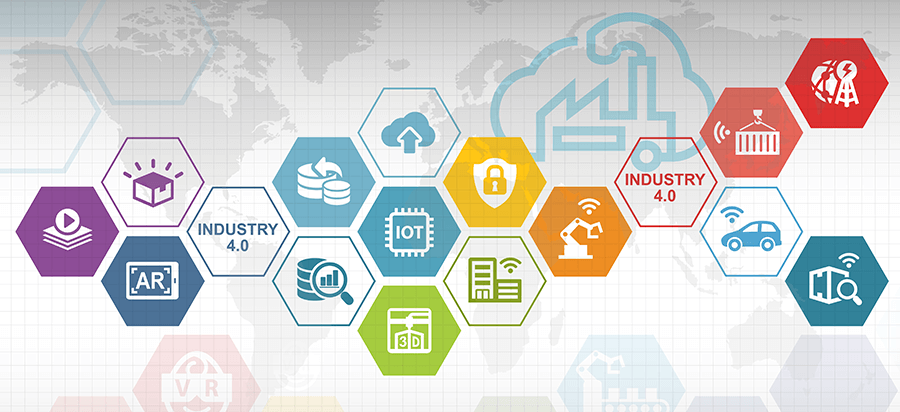
We are now in the Information Age. More data has been created in the last three years than ever been created before. It is not about the amount of data created, but it is about how it improves the decision making. This is when smart connections are relevant. The information needs to be collected at the right time, at the right point and showcased in the right context. Machines and people are always connected in the era of industry 4.0 , hence, enhancing the industrial processes. This revolution doesn’t depend on one technology, but several technologies. Among these technologies is Augmented Reality. Let us see how these technologies impact the revolution of Industry 4.0.
Increased productivity : Augmeted reality for industrial applications have shown a significant positive impact on productivity in industrial manufacturing. Tasks, both complex and simple, can be completed faster with the assistance of AR glasses, leading to time savings of up to 44% on average.
Process optimization : AR is particularly effective in areas where process optimization has already been implemented or is near completion. By providing real-time information and guidance, AR can further enhance and streamline production processes.
Support for short tact time : In production areas where a short tact time is crucial, AR can be highly beneficial. It enables workers to access relevant information quickly and perform tasks efficiently, contributing to improved production cycle times.
Reduced learning effect : One disadvantage of AR technology is that it may hinder the depth of learning compared to traditional analog working methods. The information provided by AR may not be absorbed as comprehensively, potentially limiting the learning potential for employees.
Potential impact on innovation : The study suggests that the group working without AR technology generated more helpful suggestions for process improvement. This implies that AR applications might not stimulate employee creativity and innovation to the same extent as traditional working methods.
Overall, AR in production offers clear advantages in terms of productivity improvement, process optimization, and support for time-sensitive operations. However, it should be noted that there are potential drawbacks related to reduced learning depth and potential impact on employee innovation. Proper assessment and consideration of these factors are essential for successful implementation of AR in manufacturing environments.
Augmented Reality (AR) identifies the set of technologies which allows viewing the real world environment in an augmented or enhanced way through computer-generated graphics. This visual aspect in the physical environment is enhanced by using various devices. Augmented reality has varied applications, but manufacturing is one domain which can be most attractive for the world of augmented reality.
Concerned with various processes to transform raw materials in the finished goods by adding value to it, Augmented reality in Industry 4.0 can be a real game changer. This is because real-time information is needed at the various stages of product life cycle. From design to prototyping, to production and assembly, maintenance, each stage has its own sets of challenges. Augmented reality can be a boon in these complex processes as it is capable to simulate, assist, and improve the processes even before they are carried out. A lot of manufacturing unit is now open to this idea of utilizing Augmented Reality can simulate the processes and reduce the downtime and streamline the operations.
Augmented Reality for Industry 4 offers diverse applications, extending beyond the acceleration of production processes. Manufacturers are increasingly leveraging the possibilities of AR in various areas to improve efficiency, enhance maintenance processes, facilitate collaboration, enhance customer relations, aid in quality assurance, and optimize production planning.
Augmented Reality for industrial application offers innovative solutions across various sectors in Industry 4.0. Here are some notable examples of AR implementation:
These examples demonstrate how Augmented reality for Industry 4 is used for optimizing maintenance procedures, improving training programs, facilitating remote collaboration, and positioning companies as technologically advanced employers. AR empowers businesses by connecting experts remotely, streamlining maintenance activities, accelerating employee skill development, and driving overall operational efficiency in the era of smart manufacturing.
The augmented and virtual reality in manufacturing is driven to increase the development and adoption of better processes and to obtain better results. Various technology companies are working to make these technologies more adaptable and penetrate them more in the manufacturing segment. These technologies are able to bring the change on the factory floor, lets the various stakeholders collaborate from the distance, and interact like never before. The businesses need to seize these opportunities to make their mark or go into the obvious oblivion.
Download the eBook to learn about how augmented reality can be implemented on factory floor.
Download Ebook
With 10+ years' experience of Hiren Kanani has helped Plutomen ensure smooth communication between the company and the client for swift project delivery with fewer iterations. He is CTO & founder at Plutomen.
Check out our latest blogs and news on all-things in Augmented Reality.
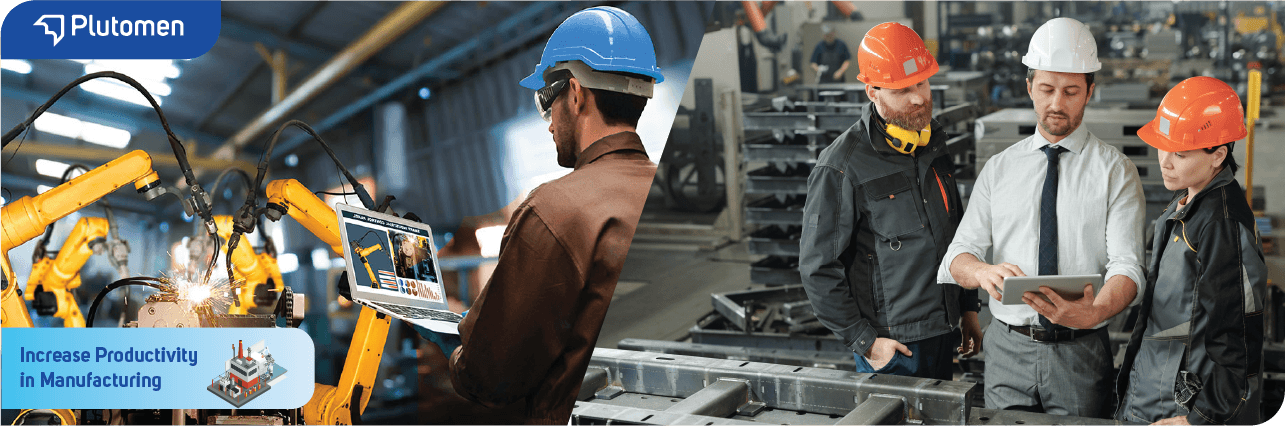
Productivity in Manufacturing and Its Importance Industrial shop floor productivity has a direct impact on the profitability. To avoid the grim consequences of reduced income, increasing production in lesser time while sustaining quality has become an area of interest for manufacturers. The intensifying industrial competition is another factor demanding manufacturing enterprises to look for ways […]
In the era of Industry 4.0, numerous industrial enterprises are adopting various kinds of digital solutions to optimize production in an ever-increasingly competitive world. Hence, industries have begun incorporating Augmented Reality (AR) in their operations, fostering increased productivity, improved quality, efficiency, workplace safety, and other significant benefits. With advanced ways of presenting information, AR is […]

We have witnessed a changed world after the first wave of COVID-19. From limited occupancies to online payments at every nook and corner to perpetually covered faces and industrial digitalization, everything is a part of the new normal. While 2020 posed endless challenges for businesses and enterprises, 2021 ascertained that those who can adapt could […]