In every industrial enterprise, maintenance and repair are critical functions that directly impact productivity and overall business performance. Ensuring that equipment runs at peak efficiency is essential for industries. Maintenance activities—from routine inspections to urgent repairs—are essential for minimizing downtime and extending the lifespan of machinery.
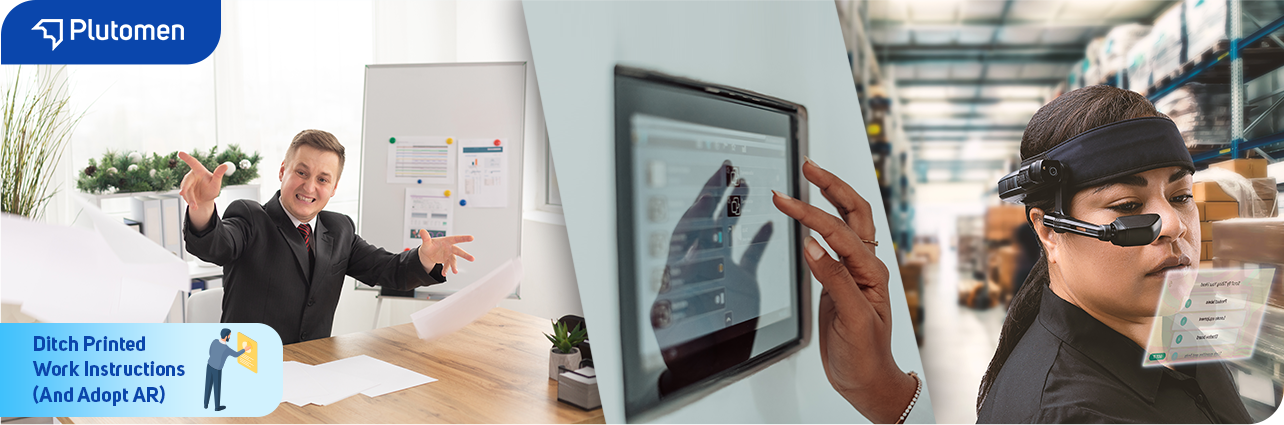
Moreover, many industries still rely on printed manuals and checklists that can be time-consuming and prone to human errors.
With the advent of Industry 4.0, we’ve seen many advancements across sectors and technologies, but we must agree that Augmented Reality (AR) has been a game-changer.
AR Simplifies the Maintenance and Repair of Machines
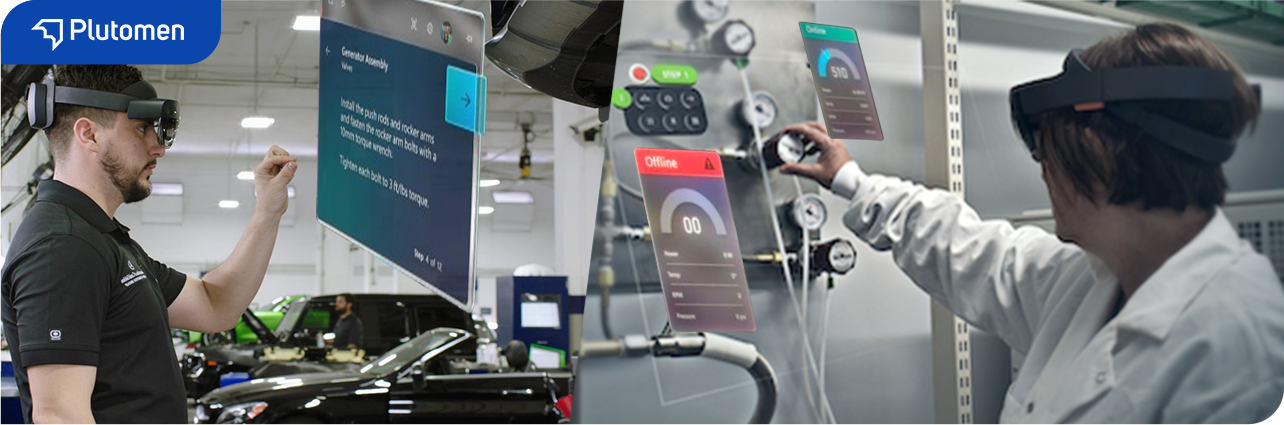
It is a boon for industries that save time and costs for enterprises. It provides an interactive environment where technicians can see the actual object in front of them and all its components augmented with digital elements. The technician can also see what tools are needed to complete the task and even get AR instructions on how to proceed.
It also provides a clear visual representation of what is happening with the machine and its usage history in the form of AR tags, making it easier to understand and solve problems.
AR also helps companies save costs because they don’t need to send their technicians out into the field anymore. They use AR-powered visual assistance and collaboration for fixing issues from remote locations. The benefits of augmented reality are immense in the domain. That’s why industrial enterprises are rapidly switching to AR-enabled maintenance and repair processes.
This article will discuss how augmented reality can simplify the maintenance and repair process.
AR in Manufacturing
Manufacturing is one of the most prominent industries using AR software. With the help of this technology, manufacturers can produce more goods with less labor and at a more efficient rate.
One of the best-known examples is a product that scans an object and then constructs it virtually in 3D on a monitor. This allows the engineer to see how the finished product will look before they even start making it.
AR software enhances efficiency by providing an environment where all necessary data is readily available to workers on their screens. This eliminates the need for workers to constantly walk back and forth between their workstation and a computer or tablet, which can be tiresome and increase the risk for injury.
Augmented reality in manufacturing has increased productivity by creating an environment where workers are constantly aware of what’s needed from them without leaving their workspace often.
Benefits of AR to Simplify the Repair and Maintenance in Manufacturing Business
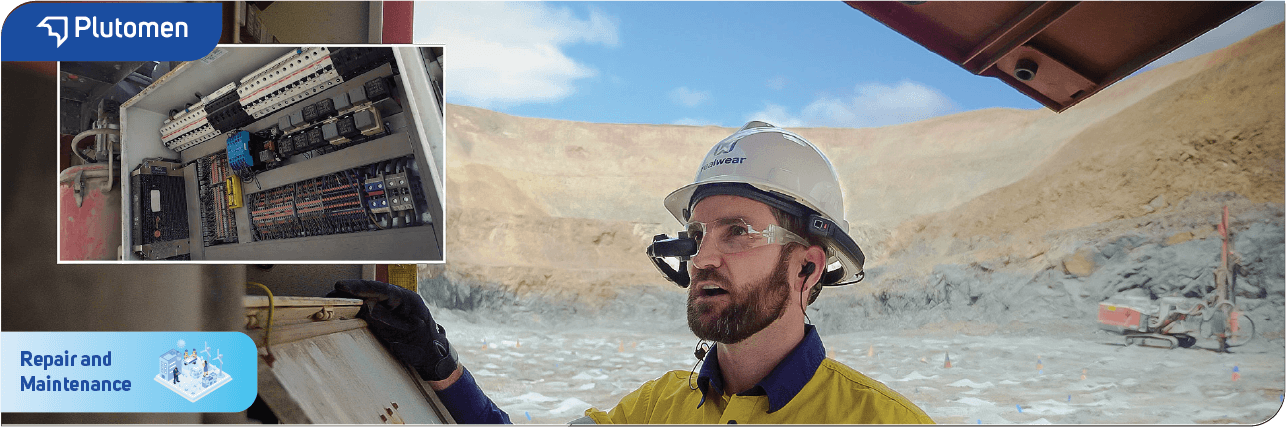
- Faster Diagnostics: Most technicians working in the manufacturing industry have to check every machine component manually. However, it isn’t the case when AR products are used to finish such tasks.AR has been used for a long time in various industries, but its practical application is now being extended to help technicians diagnose and fix problems quicker. Augmented reality software can be used to overlay the repair instructions on the actual problem. The AR technology provides a digital overlay of instructions that are relevant to the technician’s location and the machines. This allows them to see where they need to go and what they need to do while working on the repair.The technician can also use AR to see what needs to be done before they even get to the site when the repair needs to be done. It allows technicians to diagnose problems without opening up the machines or taking other time-consuming and expensive measures. This makes it easier for them to do their jobs faster, which means more time for other tasks that need attention.
- Easy to Follow Instructions: Which option would be better, reading a book for one hour and watching the video for 10 minutes? The answer is undeniable, the video, right?Reading manual instructions on lengthy papers is something that can lead to errors too. If technicians could just see what instruction needs to be followed in any devices like phones, tablets, or maybe AR glasses, it would save them a lot of time. The work will also be done with more precision as with animations, there will be less confusion, and there won’t be any language barriers.Augmented reality is enabling just the same. Enterprises can also create guides with images and animations, and technicians can just use them to get work done.
- Fewer Human Errors: Many factors contribute to human error. One of the biggest reasons is lack of knowledge. With augmented reality, technicians can access and learn new skills and maintain their knowledge by following procedures or instantly connecting with an expert when required. Industrial augmented reality enhances this by providing a more interactive and visual way for technicians to follow repair procedures. It also minimizes the risk of human error because they can easily access all the necessary information without looking at a manual or computer screen.With the use of AR, technicians can visualize what they need to do with a given part. This eliminates the need for them to rely on their memory, which means they are less likely to make mistakes.
- Taking the load off Experts: Most companies have a limited number of experts, and it’s best to keep them for the worst-case scenarios. Also, they often need to visit repair sites. Travelling takes up most of their time. However, with AR, experts are just a call away; they can guide technicians from anywhere, anytime. With 3D visuals, experts can visualize everything in real-time and direct technicians to make necessary repairs.Many companies already use AR technology to provide their customers with instant support on-demand. It will be used even more in the future and save time and money that would otherwise be spent on an expert’s consultation or travel costs.
- Closing the Skill Gap: Augmented reality can be used to train workers on how to do their jobs more efficiently and effectively. Training with AR is an immersive experience that contributes to the retention of workers. Bringing real-life scenarios to the teams during training paves the way for them to learn new skills and adapt to the changing dynamics of their industry. It is more interactive than traditional training methods, which are often passive and not as engaging.With AR, training or reskilling can be performed actively by performing real cases of maintenance or assemblies. Workers get hands-on experience with the equipment they will use in the field. This way, they can learn faster and better understand the equipment.
- Real-time Collaboration: Remote support is a significant problem in the tech industry. It often takes technicians hours to get their questions answered, which means they have to work with limited knowledge.AR is utilized to solve this problem because it provides real-time feedback and enables remote collaboration. AR-based remote support will give the technicians instant access to information about their tools, environment, and tasks. This will allow them to fix problems quickly and efficiently without wasting time getting answers from experts back at the offices.
Conclusion
Maintenance is often seen as a difficult task, particularly when faced with complex machinery. However, this is not the case with augmented reality. It makes maintenance procedures more intuitive, efficient and less prone to human errors. With augmented reality field technicians can access the instructions in real-time and solve issues with greater accuracy. This improves the quality of maintenance operations and speeds up repairs.
Technicians can also collaborate with experts anytime, anywhere. This ensures that they will perform their tasks without being stuck in an infinite loop of trial and error.
This is a win-win situation for both sides, as it gives access to remote support, resulting in fewer breakdowns, reduced downtime, and higher first-time fixes while also enhancing customer service and satisfaction.
Plutomen’s Connected Worker Platform enhances frontline capacities through remote collaboration, digitizing workflow & SOPs, and collaborating with remote experts.
Transform your repair & maintenance operations with Plutomen
Explore how Plutomen’s connected worker solutions can empower your team and streamline your maintenance processes.
Request Demo
Frequently Asked Questions

Hiren Kanani
CTO, Cofounder of PlutomenWith 10+ years of experience, Hiren Kanani has helped Plutomen ensure smooth communication between the company and its clients for swift project delivery with fewer iterations. He is the CTO and founder of Plutomen.