Short answer: Opting for Visual Remote Assistance (VRA) revolutionizes customer support by offering real-time, AR-enhanced guidance akin to expert help at one’s side—no matter the distance.
Furtermore, World Economic Forum outlines, reaching 600 million people by 2030 through reskilling initiatives is critical to adapting to technologies like VRA indispensable for the new demands of the digital economy, making training and development across industries.
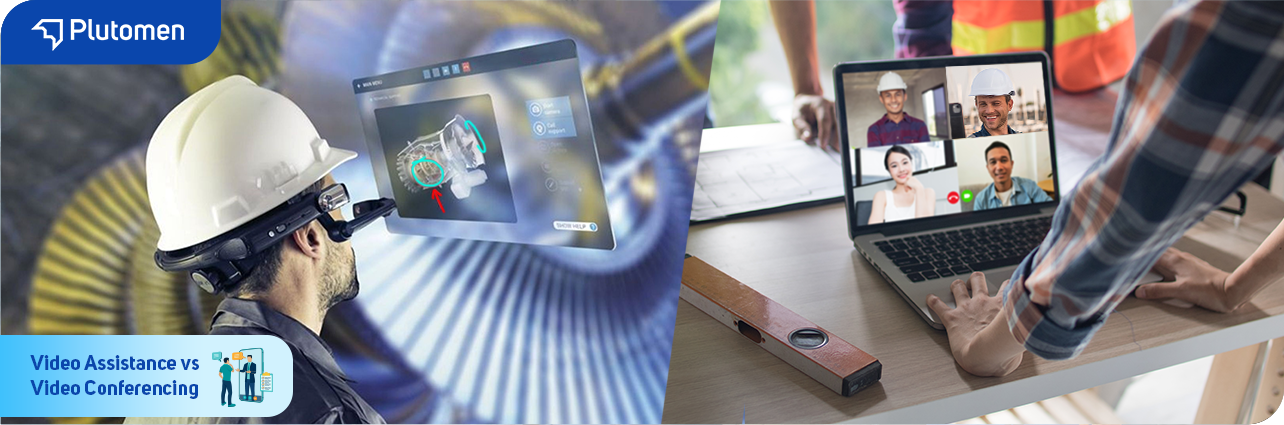
Imagine this: Customers get real-time help guided by magic glasses (okay, maybe sleek AR headsets) that show exactly what to do. No more frustrating phone calls or blurry pictures – it’s like having an expert right by their side, even if they’re miles away.
Revolutionizing Support: Transforming customer interactions with immediate, AR-enhanced solutions.
Operational Excellence: Making processes slick and super efficient in industrial work.
Sustainable Practices: Reducing the carbon footprint by minimizing the need for travel.
Pushing Innovation: Heading the move into the next wave of digital evolution and Industry 4.0.
Let’s uncover the benefits of visual remote assistance. VRAs aren’t just switching things up but also laying down new rules for how remote help is done from here on out.
VRA is revolutionizing businesses’ operations, offering unparalleled advantages that enhance efficiency, reduce costs, and elevate customer experiences.
Through the integration of Augmented Reality (AR) and real-time support, Visual remote assistance like Plutomen Connect is setting new standards in operational management. Now, we’ll get into the nitty-gritty: talking about how it ramps up productivity, cuts costs, makes customers happier and spreads expert know-how while keeping things safe and green.
Enhancing Efficiency and Productivity
Immediate Solutions: With VRA, specialists can guide onsite personnel through complex issues in real-time, slashing the average resolution time by half and ensuring continuous operational flow.
Downtime Reduction: Industries leveraging VRA report significant decreases in downtime, with some experiencing up to a 30% improvement in operational continuity. Downtime reduction efficiency is crucial for maintaining competitive edges in fast-paced markets.
Impact Across Sectors: From production strains in which VRA has cut troubleshooting instances drastically to far-off scientific consultations that keep lives, the technology’s influence is profound and ways-achieving. For example, when a car maker started using VRA, they cut their production downtime by 30%, showing off how game-changing this tech can be.
This exploration into VRA’s efficiency and productivity benefits reveals its indispensable value in modern business strategies, highlighting its role as a cornerstone of innovation and operational excellence.
Cost Reduction Strategies Through Visual Remote Assistance
Visual Assistance isn’t just transforming operations and redefining cost-efficiency in business practices. VRA delivers a robust economic benefit, underscored in our tips for selecting the right remote visual assistance software that relies on catching the eye of various industries by reducing the need for actual travel and face-to-face gatherings.
Slash Travel Expenses: The integration of VRA significantly cuts down on the costs associated with travel. Businesses can save on transportation, accommodation, and related expenses by resolving issues remotely, with some companies reporting up to a 40% reduction in travel costs.
Economic Benefits of Fewer Onsite Visits: By enabling experts to guide anywhere worldwide, the necessity for onsite visits drops dramatically. Having fewer onsite visits reduces direct operational costs and makes the troubleshooting process smoother and less demanding on resources.
Maximizing ROI with VRA: The initial investment in VRA technology pays dividends in the long run. Organizations that have adopted VRA witness a substantial return on investment through lowered operational costs, enhanced productivity, and improved customer satisfaction. For example, a tech firm implementing VRA observed a 50% decrease in operational expenses within the first year, showcasing the substantial long-term financial benefits.
Adopting VRA technologies offers a strategic pathway to enhance operational efficiency and significantly reduce costs, proving a wise investment for future-proofing businesses in today’s competitive landscape.
Elevating Customer Experiences with Visual Remote Assistance
VRA is changing the game in customer service, setting the bar higher for how satisfied and engaged customers feel. It’s all about strengthening the bond between businesses and their customers by getting back to them faster and tweaking the support to meet each customer’s needs.
Immediate, High-Quality Service: VRA technology enables support teams to address customer issues quickly and accurately. Being able to respond immediately fixes issues quicker and increases the overall service quality. Businesses utilizing VRA have seen customer satisfaction scores soar, with some reporting a 20% increase in positive feedback.
Personalized Support Experiences: Through the lens of augmented reality, VRA provides a tailored support experience that feels both personal and engaging. Customers no longer face the frustration of miscommunication or generic solutions; instead, they receive customized guidance directly addressing their unique situation.
Strengthening Customer Loyalty and Growth: The direct impact of enhanced service quality and personalized experiences is a stronger bond of loyalty between customers and companies. This kind of loyalty means more repeat customers, good buzz, and a better rep for the brand. This retail business started using VRA for customer help and saw a 30% jump in folks returning to buy more, showing how this tech can pump up business growth.
By putting customer happiness first with VRA technology, companies are hitting and even going beyond what today’s shoppers expect, setting themselves up for ongoing growth and success in a world that’s getting more digital by the day.
Empowering Through Knowledge: The Role of Visual Remote Assistance
VRA goes way beyond the usual limits, giving you a top-notch way to share knowledge and tap into expert advice. With augmented reality(AR) remote collaboration, VRAs kick team performance up, hone skills, and compile a hefty knowledge bank that’s a major score for the entire company.
Instant Expert Consultation: With VRA, the barriers to immediate expert advice are eliminated. Employees on the ground can connect with specialists in real time, ensuring that complex problems receive the expert attention they require swiftly. This instant access speeds up solving problems and creates a vibe where everyone’s constantly learning and sharing what they know.
Building a Comprehensive Knowledge Base: The ability to record VRA sessions allows each call to ensure a unique one-time experience. This is part of the growing knowledge base available to every employee. The set of real examples of problems solved is an unbeatable tool for self-sustaining education and reference, thereby drastically decreasing the learning curve of newly added team members.
On-demand Training for Skill Enhancement: VRA introduces a new paradigm in training, where employees can engage in on-demand learning sessions tailored to their immediate needs. This way of training ensures learning is spot-on, quick, and fits what you need to do at work, seriously leveling up skills all around.
With VRA in their toolkit, companies can smooth out problem-solving and decision-making and invest in their team’s long-term growth. This intelligent move to share knowledge and get expert advice changes what organizations can do, turning constant learning and getting better all the time into a critical part of the work vibe.
Strengthening Safety and Compliance with Visual Remote Assistance
VRA is shaking up how we think about safety and sticking to the rules, especially in jobs with a bit of danger. With VRA, businesses can look after their team and keep everything up to snuff with health and safety laws.
Enhanced Safety Protocols: VRA is a critical real-time monitoring and guidance tool in environments where safety is paramount. It lets the pros keep an eye on things from afar, jumping in with help or a heads-up when they spot a safety issue. This cuts down on accidents and makes the workplace a lot safer.
Regulatory Compliance: With regulations becoming increasingly rigorous, VRA offers a seamless way to ensure that operations remain compliant. Thanks to VRA, doing thorough remote checks and audits to stick to safety standards is a breeze, dodging fines and trouble. It’s about staying one step ahead in ensuring places are safe and proving that businesses care about keeping things secure.
Applications in High-risk Sectors: Industries such as oil and gas, mining, and construction, known for their high-risk environments, are finding immense value in VRA. VRA means you can do checks and get expert advice without anyone having to be there, reducing the risk of getting hurt in dangerous spots. Take a mining company that started using VRA and saw safety problems drop by 40% in just a year—that’s huge for making work safer.
VRA is turning safety on its head! Forget clunky manuals and endless training videos. Imagine workers having a virtual safety angel on their shoulder, guiding them through procedures and highlighting potential hazards – all through sleek AR glasses. High-risk industries are adopting remote visual support as a service because VRA, with its cutting-edge technology, acts as a virtual safety angel, guiding workers and highlighting potential hazards, making it the safety game-changer.
In an era where environmental responsibility is paramount, Visual Remote Assistance (VRA) emerges as a critical ally in reducing businesses’ carbon footprint and aligning with Corporate Social Responsibility (CSR) objectives.
Minimizing Carbon Footprint: VRA significantly reduces the need for travel, a significant contributor to carbon emissions. Employing visual remote assistance technology, industry specialists can deliver precise guidance and address complex operational challenges from their workstations. Indeed, several organizations have observed a reduction in travel-related emissions, with figures reaching up to a 50% decrease.
Supporting CSR Goals: Beyond operational efficiency, VRA aligns seamlessly with the broader CSR objectives of companies committed to environmental stewardship. When companies get on board with VRA, they wear their heart on their sleeve, showing their commitment to going green. This move doesn’t just look good; it feels good, especially in the eyes of customers and partners who support brands that care for our planet.
Case in Point: A global consultancy firm implemented VRA for its international projects, significantly reducing travel requirements. Enabling VRA for frontline workers is a strategic decision to lower operational costs. Majorly adding the VRA technology for frontline workers impacts a firm’s CSR objectives to reduce environmental impact and promote sustainable business practices.
Picture VRA as the cool kid at the crossroads of cutting-edge and green living, handing businesses the keys to a kingdom where reducing their environmental footprint and hitting CSR goals go hand in hand.
Embracing the Future: Tech Advancements & VRA Integration
Visual Remote Assistance (VRA) is at the cutting edge of technological innovation, seamlessly integrating with existing systems and the Internet of Things (IoT) to redefine the landscape of remote assistance. The IDC Report on emerging tech like Augmented and Virtual Reality highlights this trajectory, forecasting significant growth and opportunities in these technologies.
Seamless System Integration: VRA technologies are meticulously engineered to integrate seamlessly with existing operational infrastructures, including IoT ecosystems. Adding IoT to visual remote assistance is a strategic approach that significantly elevates data precision during onsite operations, streamlines operational workflows, and sharpens decision-making capabilities. For instance, when VRA is combined with IoT, real-time device data can guide remote experts in providing precise, context-aware solutions, significantly improving outcomes.
Evolving with AR and VR: The future of VRA is intrinsically linked to the advancements in AR and VR technologies. Our AR remote assistance guide delves into how these emerging technologies (AR, VR, etc.) are set to elevate the remote assistance experience by offering more immersive, interactive sessions. Imagine a technician wearing VR goggles, being guided through a complex repair process by an expert viewing the same scenario through AR. Merging AR & VR technologies with visual remote assistance significantly slashes error rates and bolsters learning retention among newly onboarded frontline workers across various industries.
Innovative Applications on the Horizon: As the capabilities of augmented and virtual reality technologies continue to evolve, their assimilation into VRA systems is set to unlock untapped potential. Imagine the potential – from conducting complex surgical operations remotely with guidance from leading surgeons to executing precise machinery repairs in remote locations.
Integrating Visual Remote Assistance (VRA) with the latest technological development(IoT, AR, VR, etc.) and enhancing the vast potential of AR/VR for industrial use is the beginning of an innovative approach for frontline workers. These technological integrations in VRA are poised to elevate operational efficiency across various industries, enhance the learning process for the newly & semi-experienced front liners, and reveal ideal hidden breakthroughs, which previously were thought impossible in our capabilities due to technological constraints. As we navigate these advancements, the horizon for VRA is aglow with the prospect of a more interconnected, proficient, and enlightened global community.
Key Takeaways of Visual Remote Assistance Benefits!
In essence, Visual Remote Assistance is not just changing the game; it’s creating a new one. Below is a quick excerpt on how VRA is doing it.
Revolutionizing Business Operations: VRA is not just an innovation; it’s a paradigm shift in how businesses interact with customers and manage operations. VRA is setting new benchmarks for efficiency and engagement by harnessing AR technology.
Cost-Efficiency Reimagined: With significant travel and operational expense reductions, VRA is proving to be a financial game-changer. The technology slashes costs and delivers a robust ROI, making it an intelligent investment for future-ready businesses.
Elevating Customer Experiences: VRA transforms customer service from a traditional chore to an engaging, personalized journey. This leap in service quality and responsiveness creates loyal customers and drives business growth.
Knowledge Sharing and Skill Building: VRA breaks down barriers to expert access, fostering an environment where knowledge is freely shared and skills continuously enhanced. This culture of learning is accelerating problem resolution and empowering teams like never before.
Safety and Compliance in Focus: VRA is essential for maintaining security and regulatory compliance in high-risk sectors. Its ability to provide remote oversight and guidance protects employees and safeguards operations.
Championing Environmental Sustainability: By minimizing travel, VRA is helping businesses reduce their carbon footprint and align with CSR objectives, contributing to a greener planet.
The Bright Future AR and VR: As VRA evolves with AR and VR, the possibilities for remote assistance are expanding into realms previously unimagined. This technological synergy is paving the way for a future where expert help is just a virtual call away, regardless of physical distance.
With its profound impact on operational efficiency, cost reduction, customer satisfaction, and environmental sustainability, VRA is a beacon of innovation, guiding businesses toward a more efficient, engaged, and sustainable future.
Learn How to Use AR Assistance with your 4.O Operations!
Go in-depth on digitizing AR-Driven Remote Assitance with Plutomen Connect...
Visual Remote Assistance (VRA) boosts operational efficiency by enabling experts to provide instant support from anywhere, dramatically cutting down problem-solving times and keeping workflows uninterrupted. This direct and efficient method of troubleshooting ensures operations are smooth and productive.
Absolutely. By leveraging VRA, businesses experience:
1. Lower travel expenses, as experts guide remotely.
2. Fewer on-site visits, thanks to real-time troubleshooting.
3. This results in significant cost savings and a strong return on investment, making VRA a financially savvy choice for modern enterprises.
VRA supports green initiatives by minimizing the need for physical travel, significantly reducing the carbon emissions associated with traditional business operations. This commitment to digital-first solutions aligns with broader corporate social responsibility goals, highlighting a company's dedication to sustainability.
VRA transforms customer service by offering:
1. Immediate resolutions, leading to reduced wait times.
2. Tailored support, ensuring solutions are specific to customer needs.
3. This personalized and efficient service dramatically enhances customer satisfaction, fostering loyalty and positive brand perception.
Through VRA, employees access a wealth of knowledge with ease. They can:
1. Receive expert guidance in real-time, enhancing on-the-job learning.
2. Utilize a digital library of recorded sessions for self-paced training.
3. This approach accelerates skill development and promotes a culture of continuous learning within the organization.
With more than 12+ years of experience in the world of enterprises, technology, and metaverse, Keyur Bhalavat is leading Plutomen to gain meaningful partnerships & to have a strong clientele network. He is one of the board members of GESIA (Gujarat IT Association Ahmedabad).
Recent Blog
Check out our latest blogs and news on all-things in Remote Asssistance.
The rapid advancements in technology are transforming the industrial workplace. The shift towards digital transformation is affecting the present and future of organizations, especially in the industrial sector. Augmented reality (AR) has been a key player in this transformation journey, offering new and improved ways of conducting business after the Covid-19 crisis. As organizations strive […]
Imagine going on a long drive in the hills, and your car suddenly breaks down. You look around but don’t find any automobile repair shop nearby. So, you call your mechanic to describe what happened, and the mechanic can be a remote expert. The mechanic then gets connected through visual remote assistance technology and starts […]
Nowadays, for the majority of us, video conversations have become a regular part of life; interestingly in industries too, the variety of options available, such as Webex meetings, Microsoft Teams, zoom and Skype are used for Business meetings. Here’s the challenge, it’s difficult to keep track of everything ultimately making things more complex. Fortunately, there […]