What if you could construct an exact digital duplicate of a manufacturing operation, machine, or product and then utilize it to enhance and fine-tune the physical version in real-time? Sure, kind of like a science fiction movie plot? Well, this technology does actually exist, and it’s known as a digital twin.
This is where digital twins are transforming the manufacturing space, as they give huge visibility into the manufacturing process. Generating virtual replicas of physical assets allows manufacturers to simulate scenarios, anticipate failures, and make adjustments in real-time. The result? Increased productivity, decreased costs, and enhanced product quality.
In this article, we will discuss what digital twins in manufacturing mean, as well as the advantages and exciting future they present for the industry. So buckle up and discover how this advanced technology is revolutionizing the production sector.
What is Digital Twin in Manufacturing?
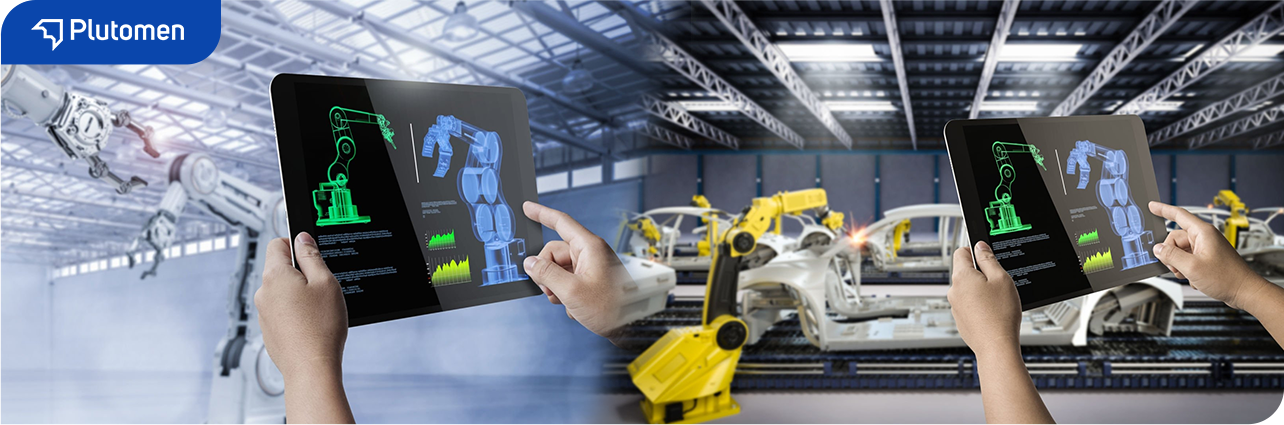
The concept of a digital twin in manufacturing refers to an exact virtual representation of a physical machine, product, or process. It will provide a full replication of the whole production process—machinery, equipment, and raw materials—while showing how an object would behave under the influences acting in reality.
A digital twin can also be the design model for a prospective asset which will be updated and maintained to reflect the as-built state of that asset throughout its construction and operational life.
“Digital twins are a dynamic software model of a physical thing or system (Gartner)”
The manufacturers make use of digital twin manufacturing software in the running of various scenarios, testing possible improvements that could help them reduce costs, enhance efficiency, and increase productivity. Based on analysis of data from the digital twin, manufacturers can make informed decisions about changes to be made to the physical object or process.
For instance, a digital twin of a machine tool could be used to simulate different machining strategies, thereby allowing manufacturers to identify the most efficient approach before making changes to the physical machine. Equally, a digital twin of a production line will be used to identify bottlenecks and allow for the smoothing of the flow of materials and products.
Fundamentally, digital twins are the powerful tools that will enable manufacturers to take up the challenge of operational improvement, cost reduction, and increased productivity in a digitally changing world.
Digital Twin Market Highlights

Benefits of Digital Twins in Manufacturing
Digital twin technologies offer numerous advantages, and a few of them are listed below:
- Improved reliability of equipment and production lines: Digital twins can monitor equipment and processes in real-time; hence, any fault or anomaly can be detected well in advance. This proactive way avoids breakdowns, reduces unplanned downtime, and ensures reliable operation.
- Improved productivity: Digital twins give insight into the optimization of processes and enhancement of efficiency. Manufacturers can easily find bottlenecks, optimize workflows, and make informed decisions with data analysis from the twin and running of various scenarios to enhance overall productivity.
- Improvement of Overall Equipment Efficiency (OEE): Reduction of standstill times and performance improvement are done through digital twin, which permits predictive maintenance due to real-time observation of equipment conditions. They detect well in advance problems that may turn up. By scheduling most activities with regard to their maintenance during this period of predictable time, makers minimize disruptions and further maximize equipment availability, leading to improved OEE.
- Lower maintenance cost: Digital Twin can optimize maintenance activities based on real-time data, which, in turn, minimizes unplanned maintenance and preventive maintenance that is not necessary. This helps in reducing the cost of maintenance by performing maintenance activities at the right time, thereby avoiding unnecessary expenses.
- Improved Workforce Training: The digital twin concept can be extended to include virtual training environments where employees learn to operate machinery and equipment in safety and with more practice. The result will be a better-trained workforce for improved operational efficiencies and fewer errors.
- Improved supply chain management: Digital twins provide visibility of the whole value chain, thereby helping in better planning, coordination, and optimization. Manufacturers can simulate different supply chain scenarios, identify potential bottlenecks or risks, and make informed decisions to optimize inventory levels, reduce lead times, and enhance overall supply chain performance.
- Save Valuable Time: Digital twins can enable quicker and more efficient troubleshooting and problem-solving. By running different scenarios and real-time data analysis, manufacturers can quickly find out what really caused an issue and apply corrective measures that save them from wasting valuable time in diagnosing a problem and finding a resolution for it.
What industry use digital twin for manufacturing?
Digital twins are widely adopted in various industries for manufacturing purposes, offering immense value and benefits. Some of the key industries that utilize digital twin in manufacturing include:
- Automotive Industry: In automotive, the use of digital twin factory concept extends to virtual prototyping, simulation, and optimization of production processes with a view to improving assembly lines and increasing efficiency in production.
- Aerospace and Defense: Digital twin manufacturing and maintenance of complex aircraft parts come with real-time monitoring, predictive maintenance, and optimization of production workflows toward safe, reliable, and cost-effective objectives.
- Electronics and Semiconductor: Digital twin optimum production processes for electronic parts, devices, and integrated circuitries improve yield, and low defects, hence smoothing manufacturing operations.
- Energy and Utilities: Digital twins will optimize operations for power plants, oil refineries, and renewable energy installations by using real-time monitoring, predictive maintenance, and simulation to guarantee further efficiency, reliability, and safety.
- The pharmaceutical and healthcare industry: As the name suggests, digital twins can provide optimization of processes in three continuous ways drug development, formulation, and manufacturing by aiding batch process optimization and critical parameter monitoring in order to adhere to regulatory policies.
- Consumer Goods: Digital twin for consumer goods industries is utilized in the design, quality checks, and optimization of production processes for better products and operational efficiency in manufacturing.
Digital Twins in Manufacturing Examples
Digital twins are truly revolutionizing manufacturing, offering more functionality and utility. Here’s an example of their implementation in the manufacturing sector:
Bridgestone’s Digital Twin Technology Drives Innovation and Performance
Bridgestone, the global leader in tire and rubber manufacturing, is transforming itself to be the leader in transportation solutions. The company regularly uses digital twin technology to understand the impact of various factors such as driving style and speed, improved tire life, road conditions, and improved performance and durability through this insight company can advise operators on preventing flat tires and extending tire life.
Bridgestone has reaped many benefits by implementing Digital Twin technology in its tire manufacturing. These benefits include:
- Advanced Tire Design: Digital twins can simulate Bridgestone tire design, making them more efficient and longer lasting. This ensures high-quality products that meet customer expectations.
- Reduced Development Time: Digital Twin Simulation enables Bridgestone to design and test new tire concepts quickly. This approach halved the development time.
- Enhanced Productivity: Digital twins enable Bridgestone to streamline manufacturing processes, reducing downtime and increasing productivity.
- Better Predictive Maintenance: By analyzing real-time device data, Digital Twins can predict potential machine failures, reducing maintenance costs and operational disruption.
- Improved Durability: Digital twins help identify areas for waste reduction, making production processes more sustainable and environmentally friendly.
Power Generation Used Digital Twins to Predict the Performance of Gas Turbines
Siemens acquired Rolls-Royce’s energy gas turbine and compressor business and based on the acquired asset, introduced the SGT-A65 aero-derivative gas turbine. This posed new challenges for production and maintenance, including unforeseen issues. Siemens’ Excel-based forecasting tools were insufficient due to the high volume of data and lack of clear results. The business required a more powerful method to predict performance, forecast KPIs, and evaluate investment options. Siemens wanted to visualize the entire production and maintenance process, including critical supply-chain logistics. They needed the ability to run multiple scenarios to communicate investment options and improve decision-making.
DecisionLab and Siemens presented ATOM, a digital twin solution to overcome challenges.
ATOM uses real-time data from various sources to create a comprehensive model of engine parameters, performance metrics, maintenance operations, and logistics processes throughout the entire turbine lifecycle.
Some of the benefits of using digital twins for gas turbines include:
- Simulate different scenarios and present their outcomes in a visual format.
- ATOM assists in making informed investment decisions.
- Captures and predicts system KPIs
Uses Cases of Digital Twins for Manufacturing
Digital twins have numerous use cases in manufacturing, such as:
Improving System Designs
Manufacturing teams use digital twins to plan and test new production lines. This means, before creating a physical system, potential issues, and optimization areas can be identified, resulting in a significant saving of both time and money. Similarly, the planning of warehouse designs can be done through digital twins in a more effective way. The utilization of digital twin visualization techniques has made issues much more conspicuous, thereby enhancing team communication and efficiency.
Testing New Products
Gone are the days when frontline workers had to undergo a tedious trial-and-error process to test new or updated products within an existing system. The advent of digital twins has made it possible for manufacturers to test out updated configurations with a significantly reduced risk of incurring costly miscalculations. The simulation of multiple scenarios has become faster, easier, and more efficient than physical testing.
Equipment Maintenance and Preventive Maintenance
Digital twins of machines provide virtual equivalents of real-time accuracy, allowing maintenance workers to see detailed machine performance and health information With the help of AI, digital twins can detect potential failures earlier, to enable manufacturers to take proactive measures.
Field technicians can use augmented reality-enabled smart glasses to view accurate models overlaid on physical equipment on the factory floor. This provides accurate specifications and a visual diagram that the engineer can rely on to do their job.
Training Frontline Workers
Digital pairs can be used to train employees and simulate real-world situations, allowing them to gain experience and knowledge without the risk of harm or injury such as creating digital twins on a production line for employees to use tools, solve problems, and improve efficiency. This can improve safety, reduce training costs, and increase employee productivity.
Quality Management
To ensure top-notch quality and reduce rework, it’s crucial to continuously monitor and respond to data during production. The digital twin can model every aspect of the production process to pinpoint any inconsistencies or identify areas where better materials or processes could be utilized.
These digital twin use cases showcase their transformative potential in revolutionizing manufacturing processes, ensuring efficiency, and driving innovation.
How do you build Digital Twins in Manufacturing?
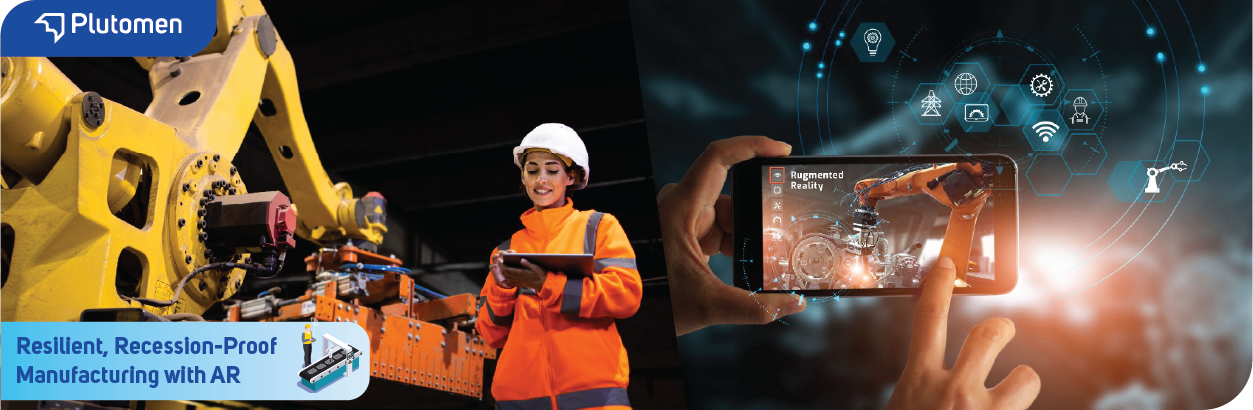
For creating a virtual replica, digital twins require a real-time flow of data from physical objects, systems, or processes that are scanned in the real world. This data is then fed into IoT systems and used to develop computational analytical models. The resulting models are displayed through 3D representations and AR techniques to simulate real-world conditions and visualize outcomes on any device, including smartphones, computers, and AR/VR devices. AR overlays the digital twin onto a real-world view, allowing frontline workers to see how the virtual model would interact with the physical world. This can be especially useful for testing and prototyping, as well as for training purposes.
Usually, digital twin deployment begins on a small scale by focusing on the performance of a single component within a product, but it eventually grows and changes over time. Yet this occurs in two different ways. Firstly, a few digital twins are combined to provide a comprehensive view of the asset, process, or system. Secondly, more advanced capabilities are added to the existing digital twin to predict the future performance of its physical counterpart.
Tool Needed to Develop Digital Twins in Manufacturing
The design and manufacture of digital twins require a range of tools and technologies that enable the creation, simulation, and management of virtual replicas The basic tools required to create digital twins include:
- Simulation Software: Tools such as Ansys Twin Builder, Siemens Simcenter, and SIMULIA from Dassault Systemes provide powerful simulation capabilities for creating virtual replicas and simulating the behavior of digital twins and physical systems.
- IoT Sensors and Devices: Sensor manufacturers offer IoT devices, such as temperature sensors from Texas Instruments, pressure sensors from Honeywell, and vibration sensors from TE Connectivity. These sensors collect real-time data from physical assets and transmit it to the digital twin.
- Cloud Computing: Cloud platforms such as Microsoft Azure, Amazon Web Services (AWS), and Google Cloud provide scalable infrastructure and services for storing, processing, and analyzing digital twin-generated data Objects such as virtual machines, data storage, and analytics tools.
- Data Analytics and Machine Learning: Tools such as MATLAB, Python Panda and scikit-learn libraries, and Microsoft Azure machine learning enable data analysis and machine learning approaches to extract insights from digital twin data, identify patterns, and predict future trends.
- Visualization and User Interaction: Visualization tools such as Tableau, Power BI, Plotly help create an interactive dashboard visual representation of digital pair data. User interface frameworks such as React and Angular with digital twin models can be developed to create a flexible interface for interaction.
Integration and Connectivity: Integration tools such as MuleSoft, Microsoft Azure Logic Apps, and Apache Kafka enable seamless connectivity and data exchange between the digital twin and other systems or databases, ensuring interoperability and synchronization.
Conclusion
As manufacturing becomes increasingly complex and competitive, the use of AR and digital twin technology can give manufacturers a competitive advantage in the marketplace. AR and Digital Twin technologies play a crucial role in smart manufacturing. By visualizing Digital Twin data through AR technology, it is possible to create a more intuitive and comprehensive integration of the physical and virtual aspects of Digital Twin.
Digital twins in manufacturing can help enhance their performance and ensure the safety of their operations by enabling operator training and advanced testing of equipment and processes through dynamic simulation. And for all this, Plutomen is a one-stop solution for the manufacturing industry.
From maintenance and repair to training and simulation, we can help you integrate these technologies and ultimately improve decision-making and reduce costs.
At Plutomen, each 3D model is highly detailed, which helps in better knowledge transfer and comprehension. Moreover, by simply scanning the barcode or QR code on a machine, businesses can quickly and easily access training materials and guides linked to specific machines or parts. This innovative solution enables frontline workers to easily access critical training materials even in complex and emergency situations.
Plutomen’s approach has always been consistent – providing the most effective solution that is agile, flexible, and scalable. It doesn’t matter what industry you’re in or what product or system you want to model; Plutomen can handle it all.
So, are you ready to take your manufacturing operations to the next level with the power of Augmented Reality and digital twin technology? Don’t wait any longer – book a meeting with one of our experts today to learn more about how our solutions can help your business optimize production, reduce downtime, and improve efficiency. Get an AR solution with us and revolutionize the way you do business!
Create 3D Digital Twins in Manufacturing with AR Training Solution!
100s of frontline workers use Plutomen Assist to create 3D Digital Counterparts. Join them.
Request Demo Now!
Frequently Asked Questions

Chirag Yadav
VP of Sales and Partnerships at PlutomenChirag brings with him 15+ Years of experience in Digital Transformation, and IT Leadership. At Plutomen, he holds deep experience in business with a track record of customer-centric approaches helping them build business transformation.




![Top 9 Uses of Augmented Reality in Manufacturing [2026 Edition]](https://pluto-men.com/wp-content/uploads/2023/04/MicrosoftTeams-image-143.jpg)